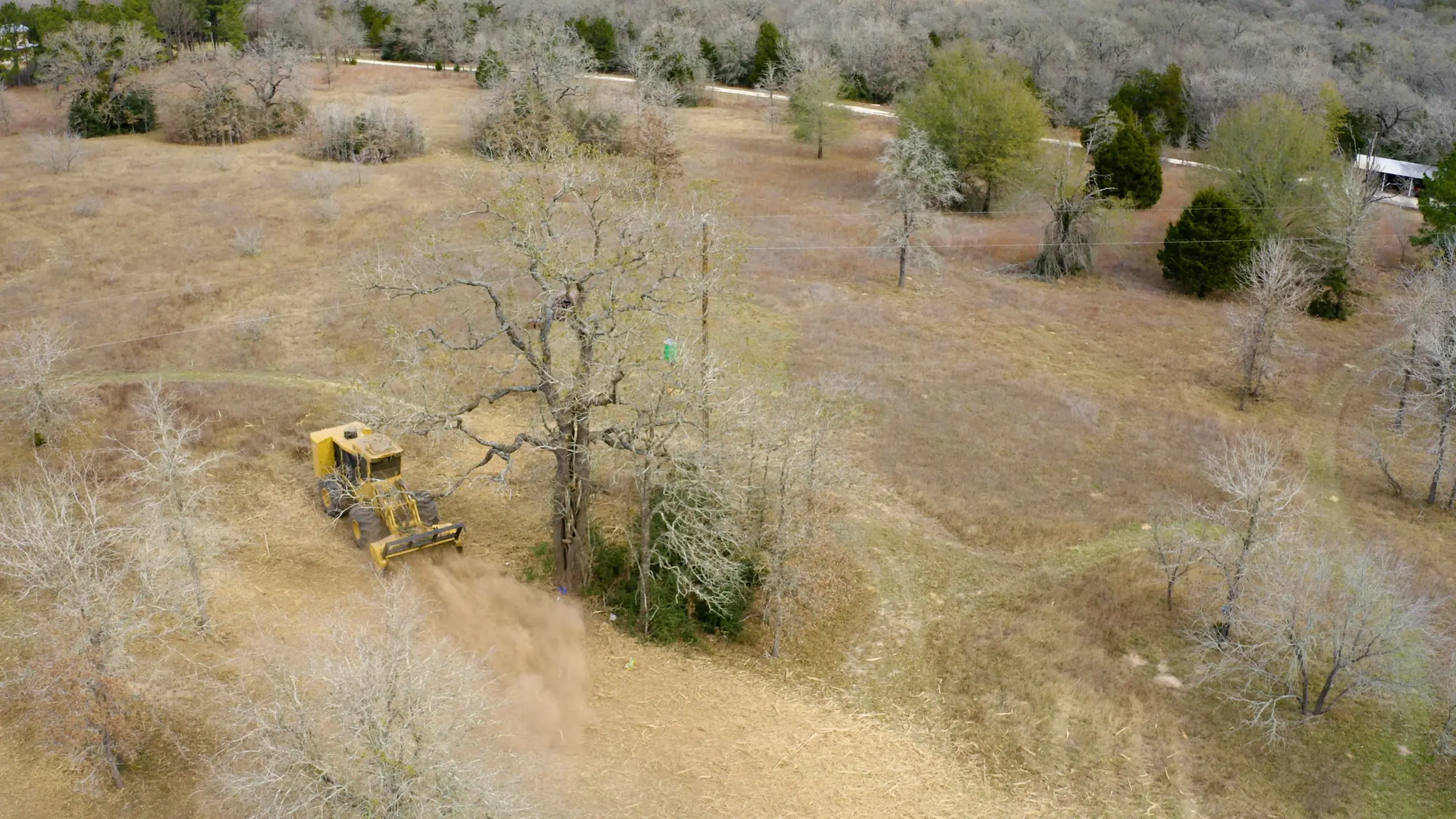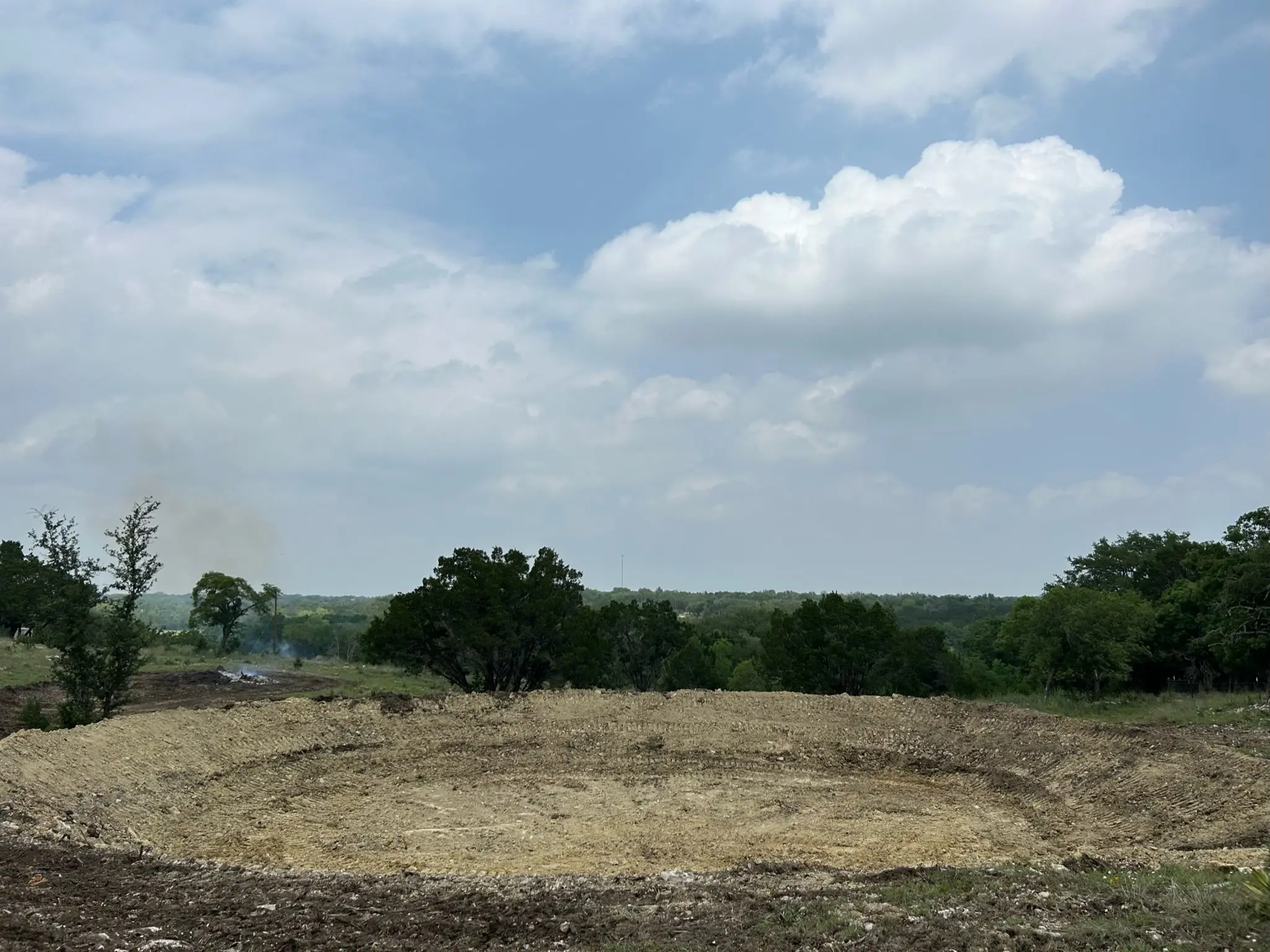
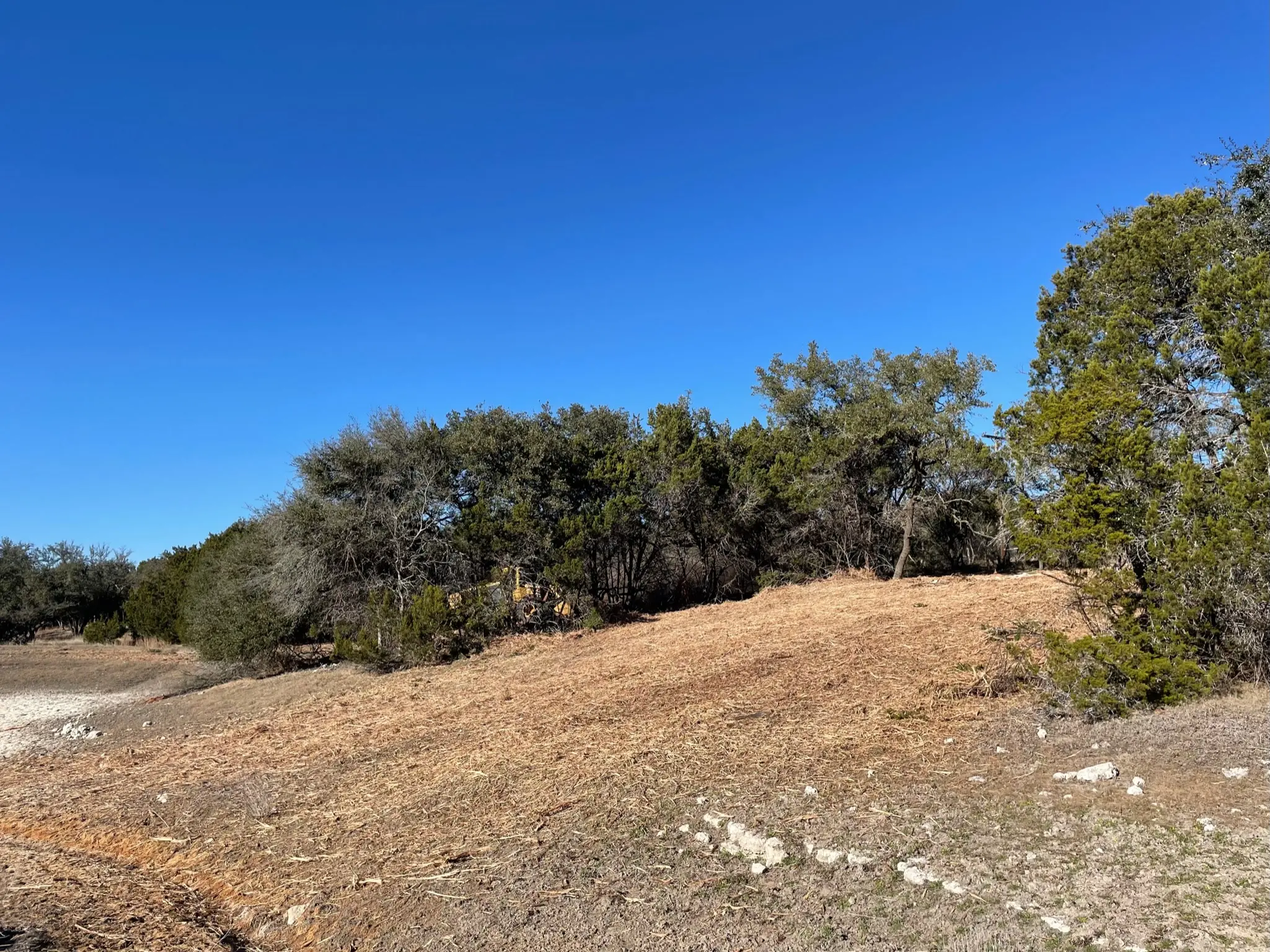
Stone crushing and rocky ground breaking turn rock-filled land in Bertram, TX and across the Hill Country into ground you can build on, drive on or graze. Not all land is soft and ready to work. Rock, caliche, limestone and old construction debris can make clearing and prep feel like a losing battle.
Instead of just pushing rock aside, we break it down on site into smaller, reusable material. That material can become road base or fill, or stay where it is to support a pad, a drive or new growth. An owner looks at the rock with you on the walk-through and tells you straight what it’s good for.
Crushed on site, not hauled away
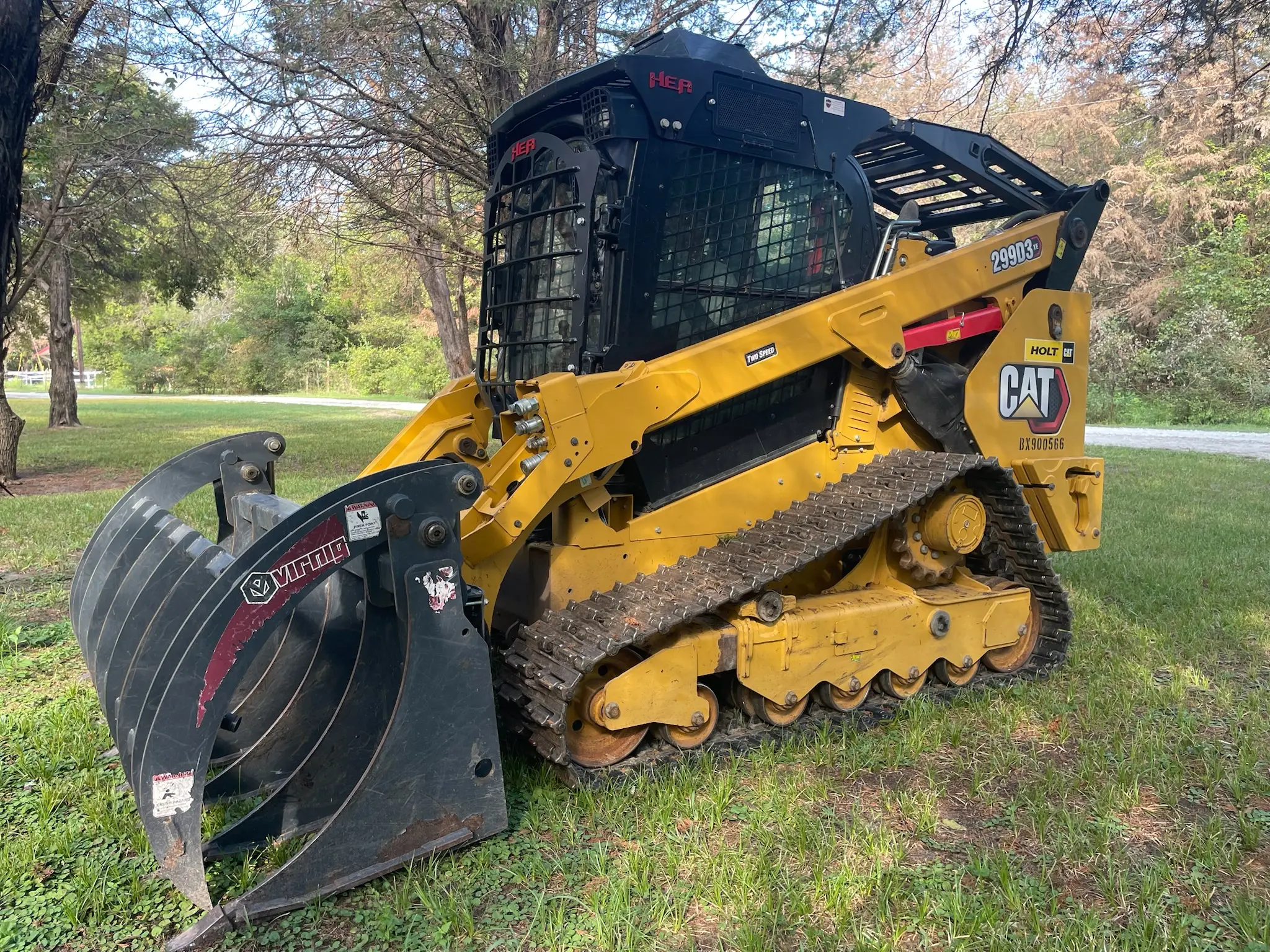
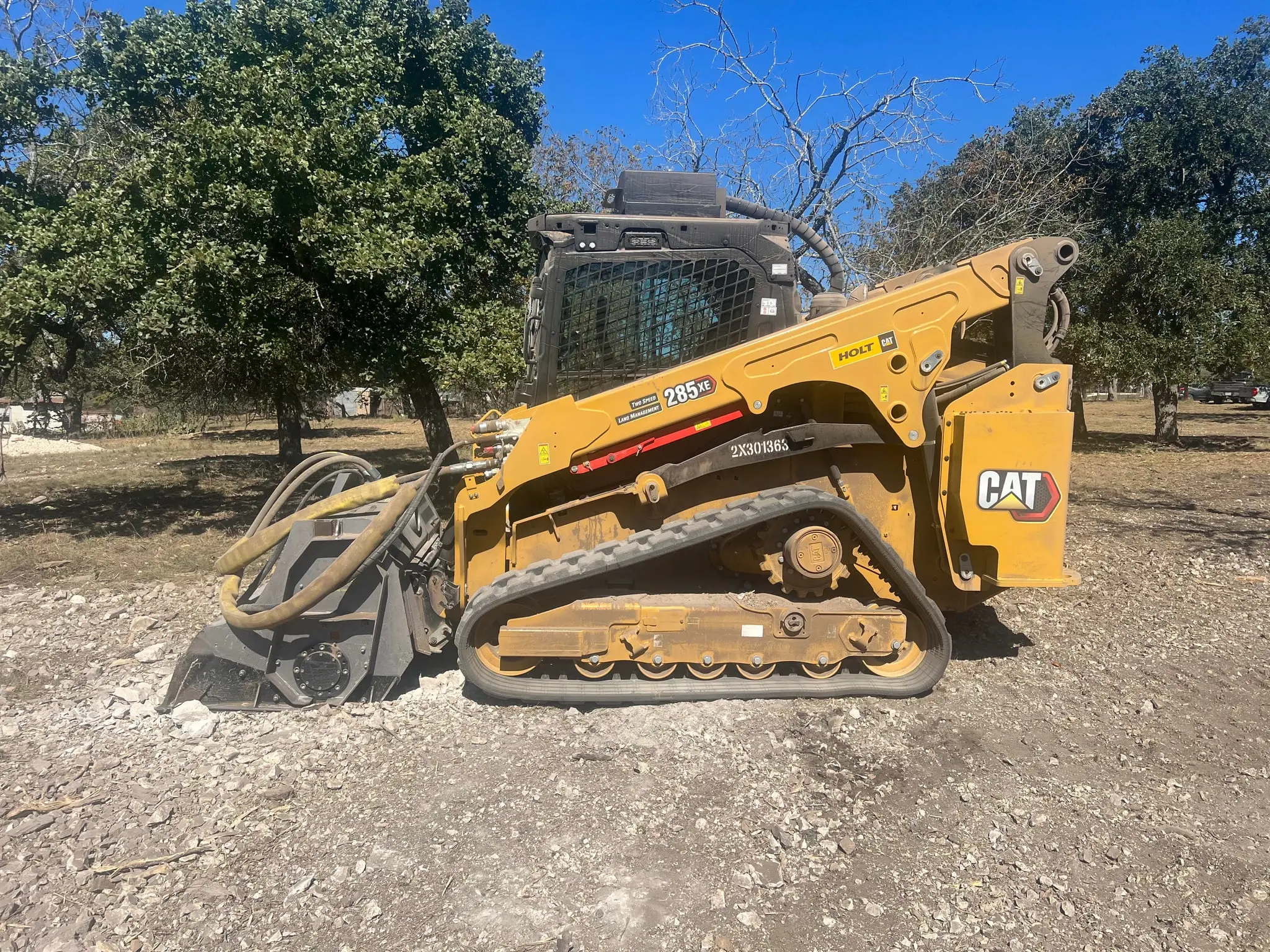
Our Cat 285 and Cat 299 skid steers run a rock crushing attachment that breaks surface rock down where it sits. There’s no hauling rock off-site and less need to truck in fill, because the material you already have gets repurposed right where it lies.
Whether a given area is a fit for crushing, and how much usable material it will give you, is something the owner looks at on the walk-through.
Limestone and caliche sit close to the surface across much of the Hill Country, so a lot of properties have plenty of material to work with. The question is how to use it, and that depends on what you’re building.
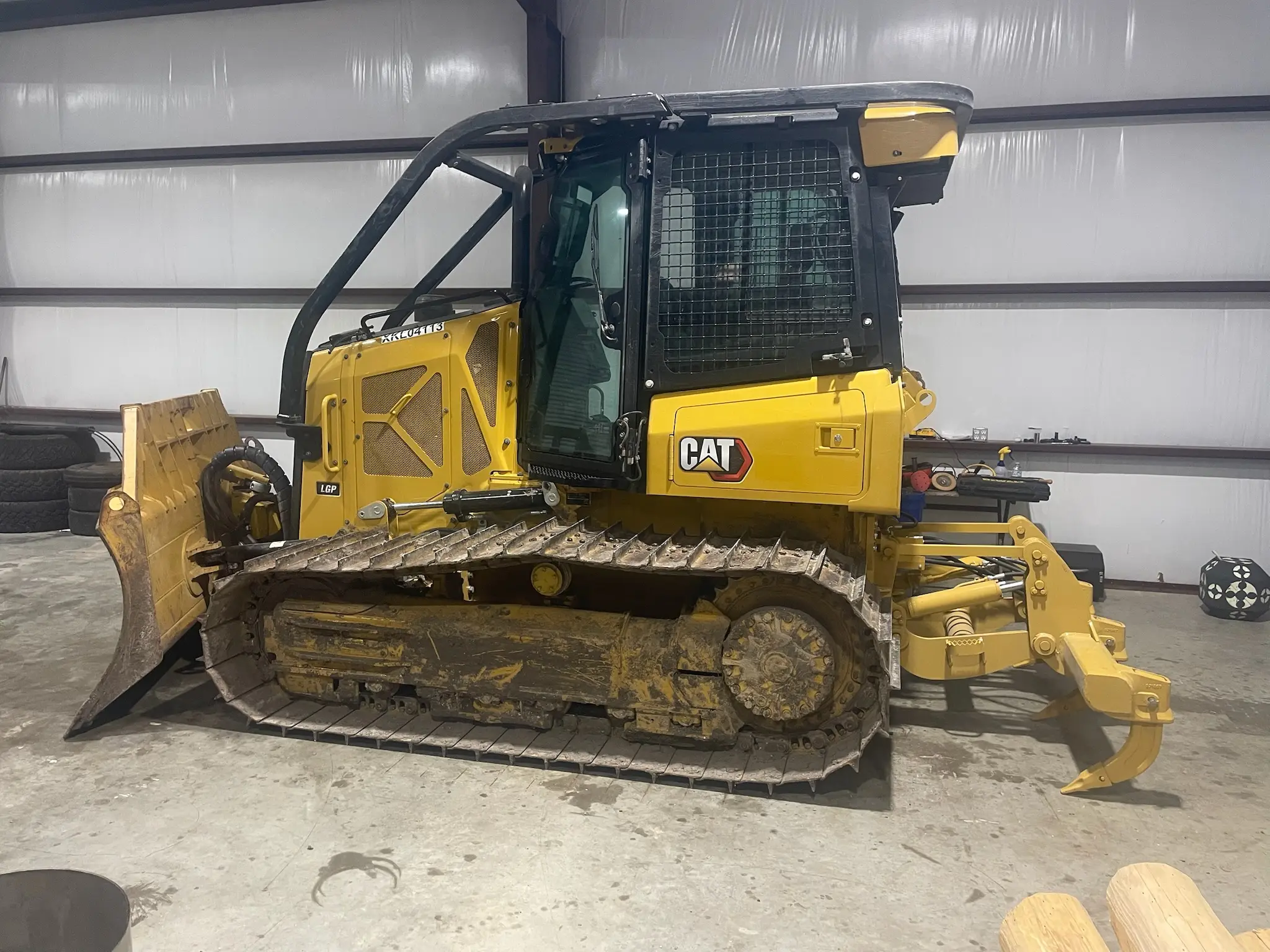
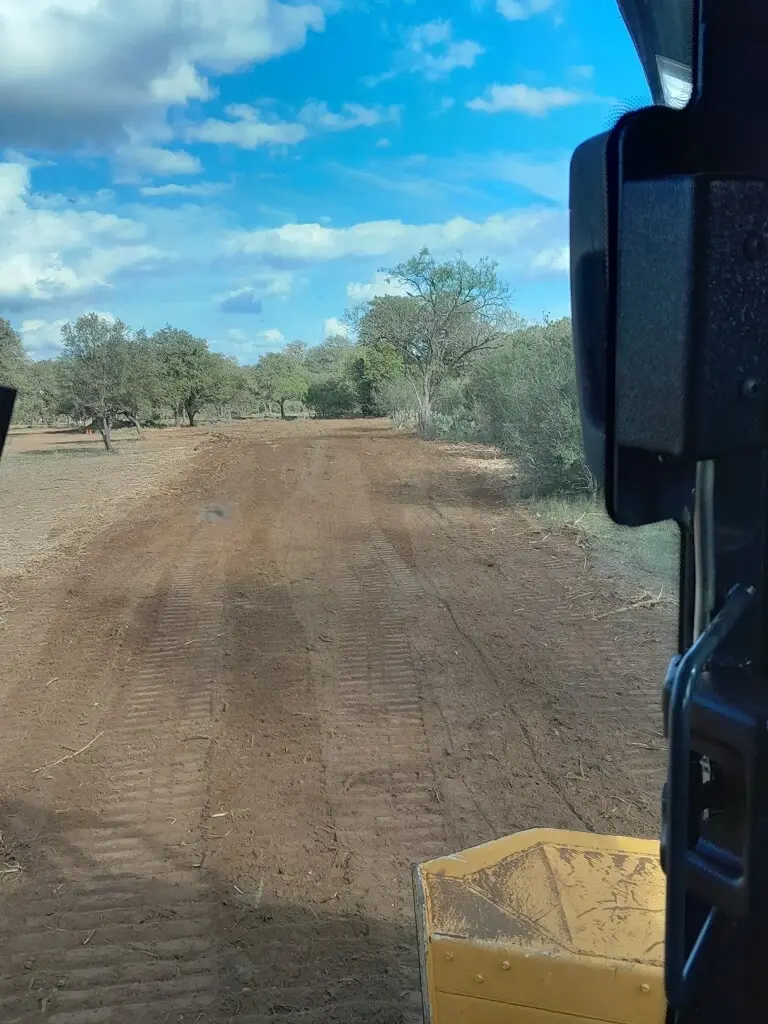
Crushed material used on site still has to be spread, shaped and compacted like any other base. We handle that with the Cat D1 dozer and the skid steers as part of the same project.
Why crush instead of clear
Rock left in the ground or pushed into piles keeps causing trouble. Crushing it does a few jobs at once.
Rock pushed into piles still has to go somewhere, and rock left in the ground keeps surfacing every time you dig or grade. Crushing deals with it once.
- Saves on hauling rock out and importing fill
- Prepares land for building or pasture conversion
- Helps drainage and soil management
- Keeps hidden rock from damaging equipment later
Pads, driveways and fence lines
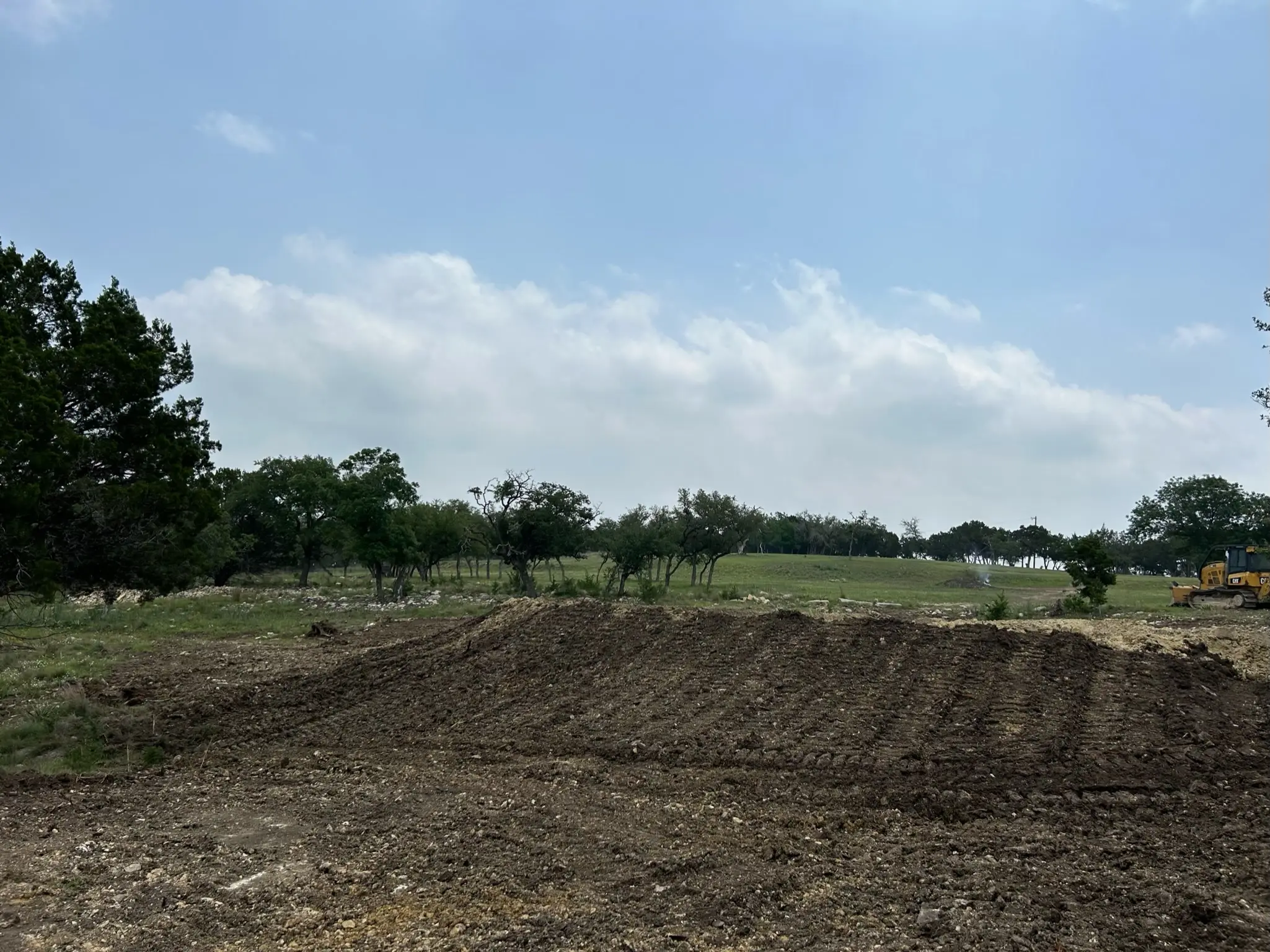
This work fits Hill Country properties with rocky outcrops, especially when you’re putting in a structure, a road or a fence. Crushed rock from the site can become part of the pad or the base layer under a drive.
It pairs well with our other work. We often clear the site, crush the rock, rough-grade with the Cat D1 dozer and then build the gravel drive as one project, so you’re not coordinating separate crews.
Breaking up the rock before you build also heads off problems later. A pad or drive laid over hidden ledge or loose rock can settle unevenly, and a fence post that hits rock halfway down never sits right.
Targeted rock busting
Sometimes the problem isn’t a whole field of rock but a ledge right where you need to dig or grade. We do targeted rock busting where rock near the surface keeps normal excavation from moving forward.
We look at the material first and bring the right equipment to break it, clear it and level the area out.
Rock busting is often paired with pond and pad work, where a few feet of rock is the only thing between you and the finished grade. Getting it out of the way early keeps the rest of the job on track.
Rocky pasture and fence posts
Rock doesn’t just get in the way of building. In pasture it chips mower blades and shredders, and along a planned fence line it makes setting posts slow going. Crushing and raking the worst spots makes that ground easier to work.
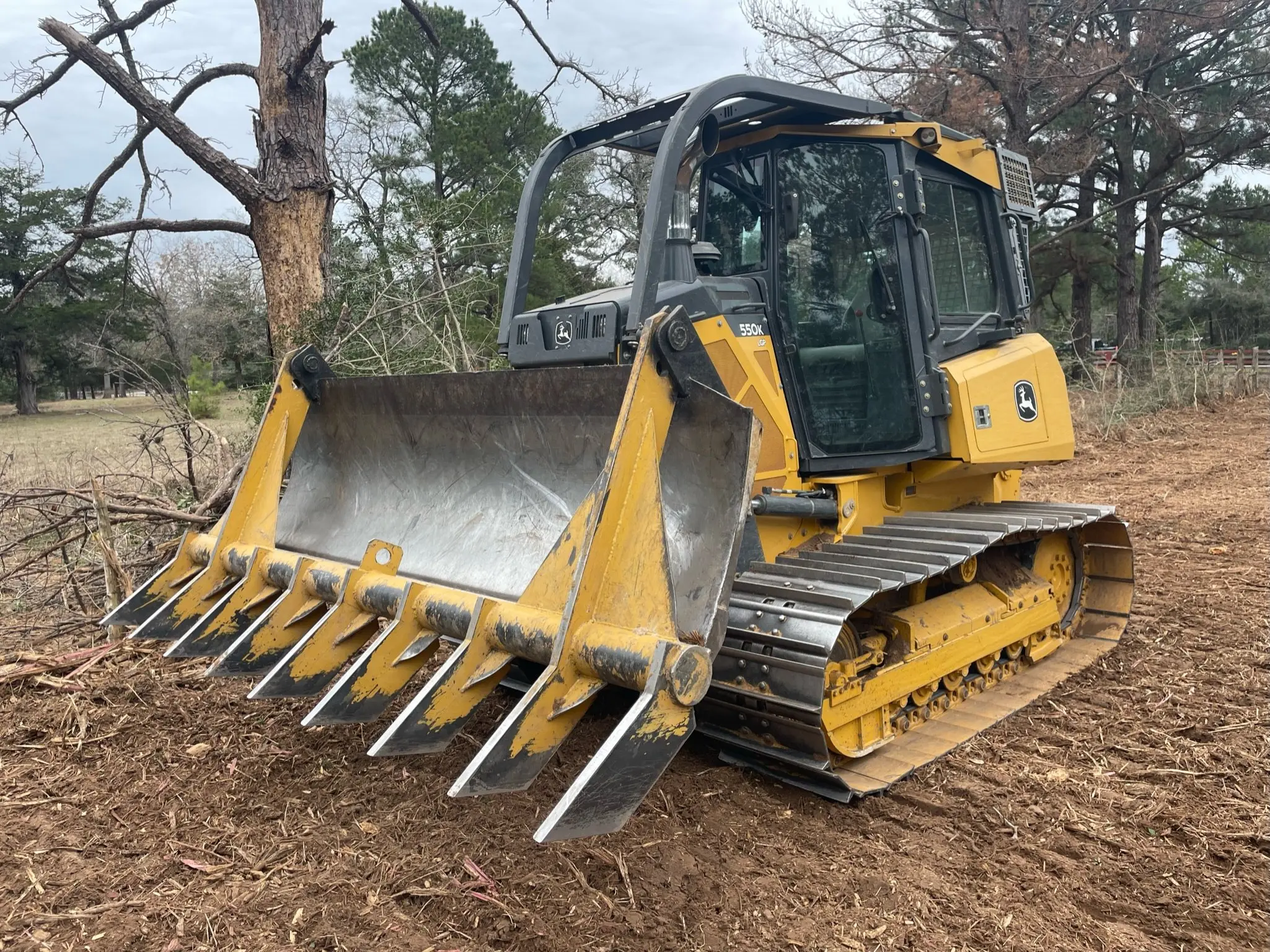
On pasture jobs, the John Deere dozer with a root rake can gather loose rock and roots, and the crushing attachment handles what’s left on the surface. The plan for each area gets set on the walk-through.
Not every rocky spot needs crushing. Sometimes the right call is to leave the rock and plan the pad or drive around it, and the owner will tell you when that’s the case.
What the job can include
- Stone crushing in place
- Rocky ground breaking
- Caliche and limestone processing
- Base material generation
- Pad and driveway preparation
- Targeted rock busting
- Rough grading after crushing