
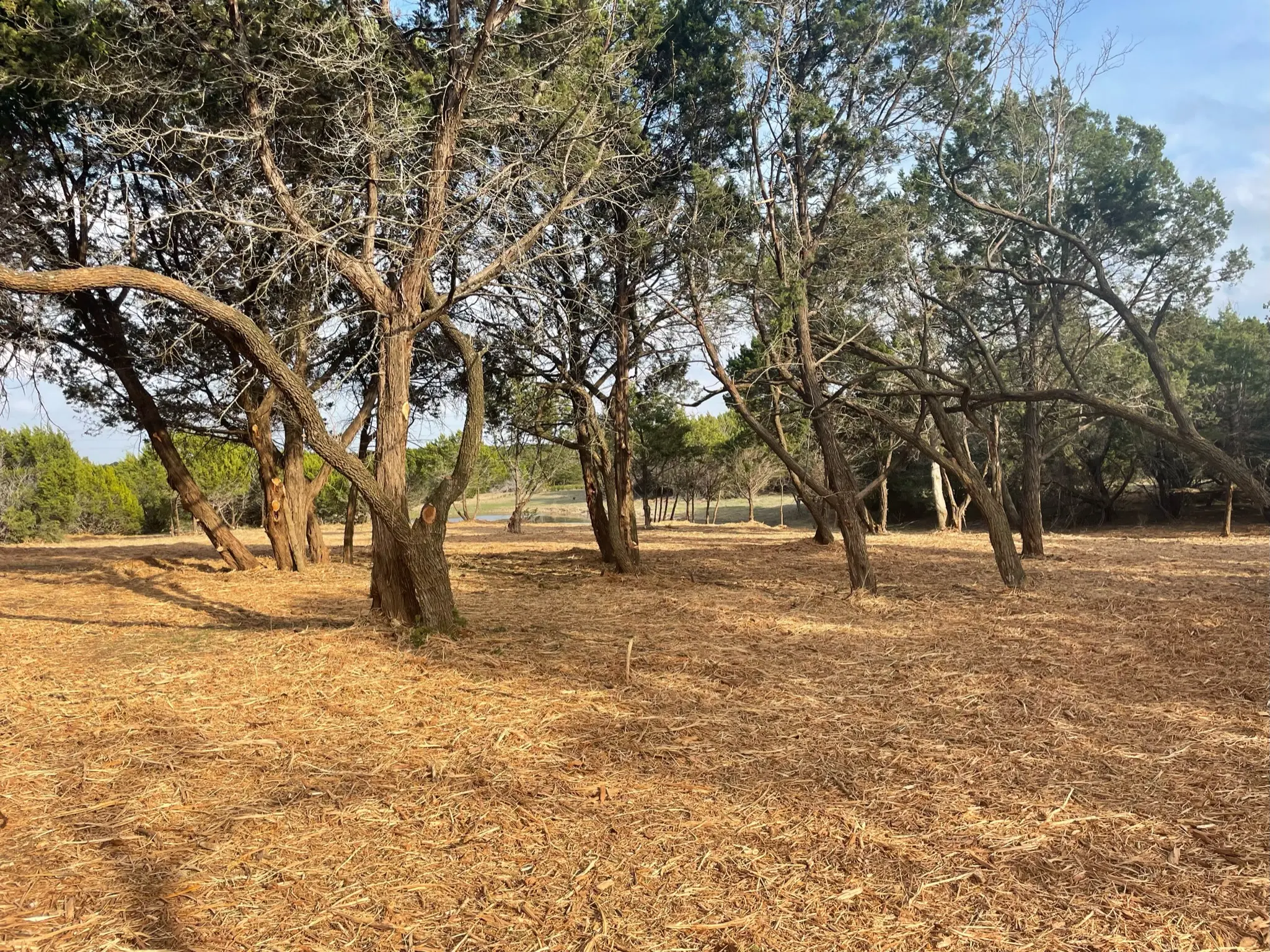
Land clearing in Bastrop County is unlike anywhere else we work. The Lost Pines, a stand of loblolly pine separated from East Texas by more than a hundred miles, grow on deep sandy soils around Bastrop State Park, Buescher State Park and the Colorado River. Post oak and yaupon fill the understory, Lake Bastrop sits north of town, and the ground turns to blackland farm country up toward Elgin.
The county also carries the memory of the 2011 Bastrop County Complex Fire, the most destructive wildfire in Texas history. Since then, cutting understory fuel has become a priority, and the county has chosen mechanical fuel reduction over prescribed burning. That’s why so many homeowners around Cedar Creek, Paige and Smithville call about yaupon and dead brush near the house, and why COO Christian Carter’s background as a federal wildland firefighter and fuels-reduction specialist matters here.
Communities we work in Bastrop County
- Bastrop
- Elgin
- Smithville
- Cedar Creek
- Paige
- McDade
- Red Rock
- Rosanky
Deep sand and yaupon thickets
Lost Pines soil is mostly deep, loose sand. It drains fast, washes easily when bare and can bog down wheeled equipment, so on this ground we lean on tracked machines like the Timberpro TL725C and the Cat D1 dozer mulcher, and the mulch they leave helps hold the sand in place.
Yaupon grows in dense thickets under the pines and oaks, and dead and down material builds up quickly. Toward Elgin the ground turns to heavier clay, and the Colorado River, Alum Creek and Piney Creek all move serious water in big storms.
Fuel reduction, homesites and farm ground
The work here centers on understory and yaupon clearing, wildfire fuel reduction around homes, selective clearing that protects pines and oaks, homesite prep on wooded lots around Cedar Creek and Paige, and pasture recovery toward Elgin and McDade. Many sit on sandy county roads and narrow drives through the pines.
Houston toad, oak wilt and burn bans
Bastrop County is home to the endangered Houston toad, and the Lost Pines are its best remaining habitat, with critical habitat designated by the U.S. Fish and Wildlife Service. Landowners in its range can take part in the county’s voluntary Lost Pines Habitat Conservation Plan, and we check whether your property falls in a sensitive area before clearing.
We follow Texas A&M Forest Service oak wilt guidance around the post oaks. Burn bans are common here, and mulching keeps fuel-reduction work going when burning isn’t allowed.