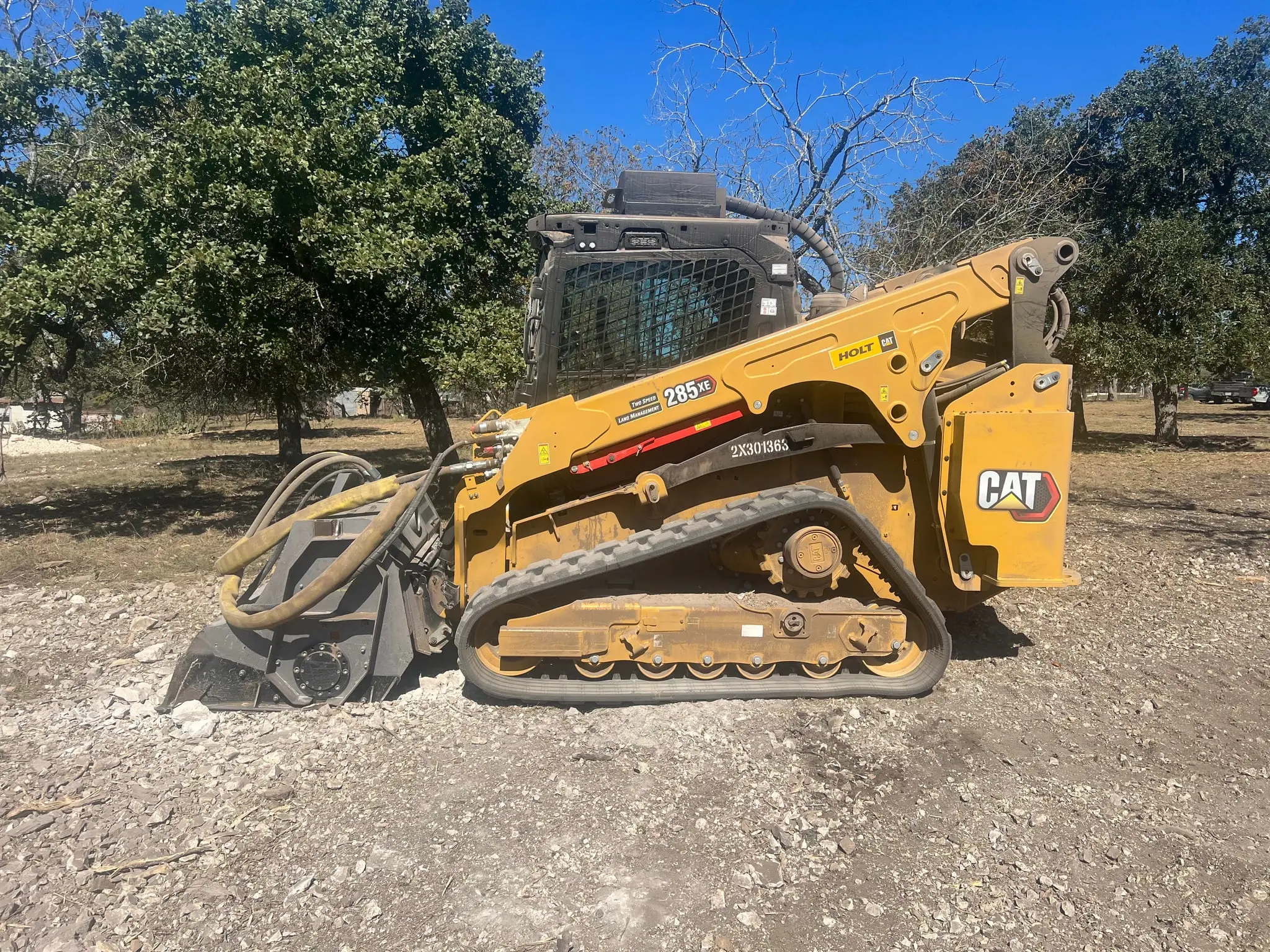
Farm and ranch road maintenance keeps the roads across your property in Bertram, TX and Central Texas open and usable. There’s nothing more frustrating than overgrowth creeping in on your right of way until you can’t get around your own ranch.
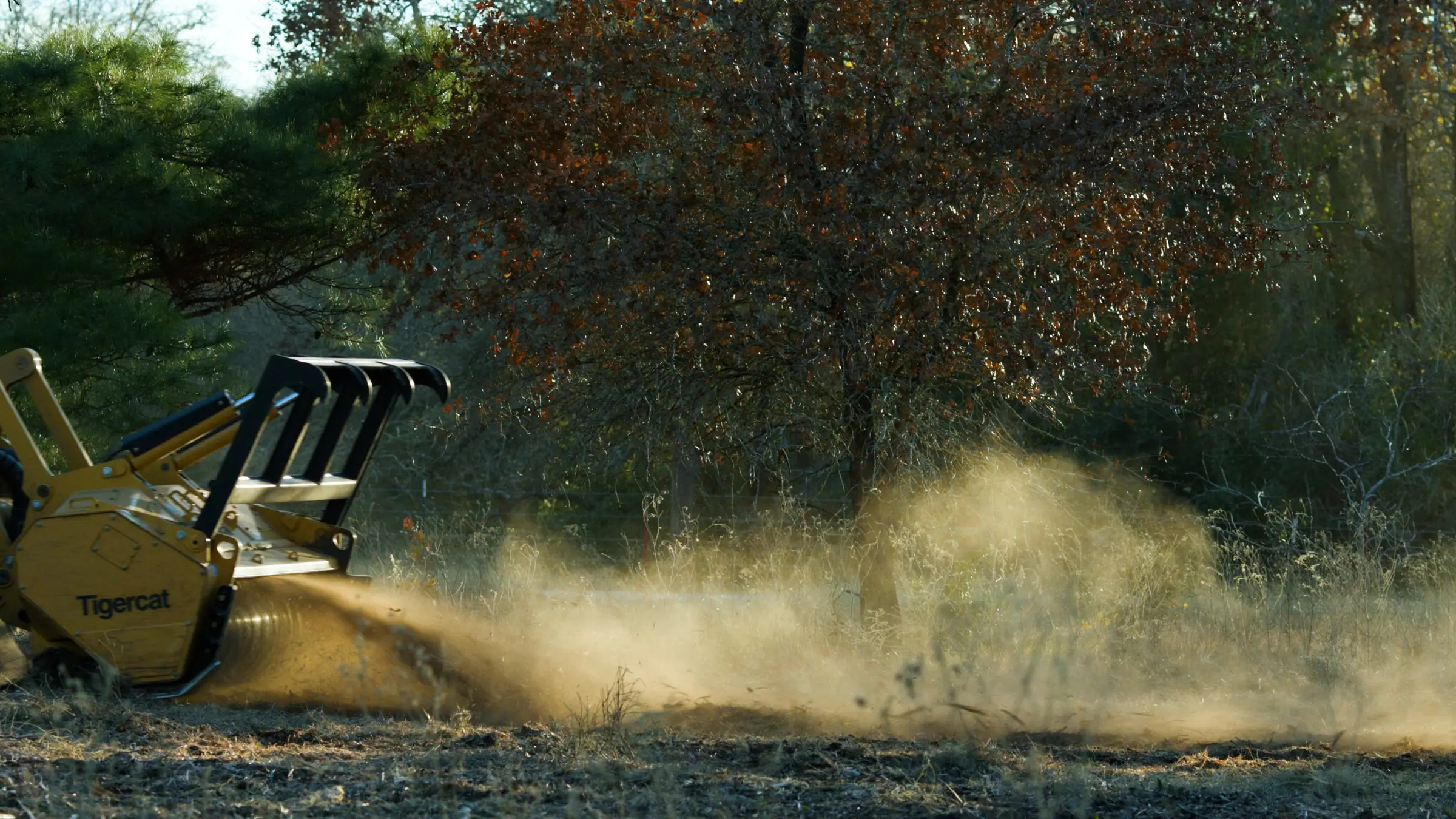
The most efficient way to get those roads working again is to clear them with a mulcher. From there, we can grade, reshape and fix the drainage, so trucks, trailers, equipment and emergency vehicles can reach where they need to go year round. An owner drives or walks the roads with you first to see where the brush and water are doing the most damage.
Clearing the right of way
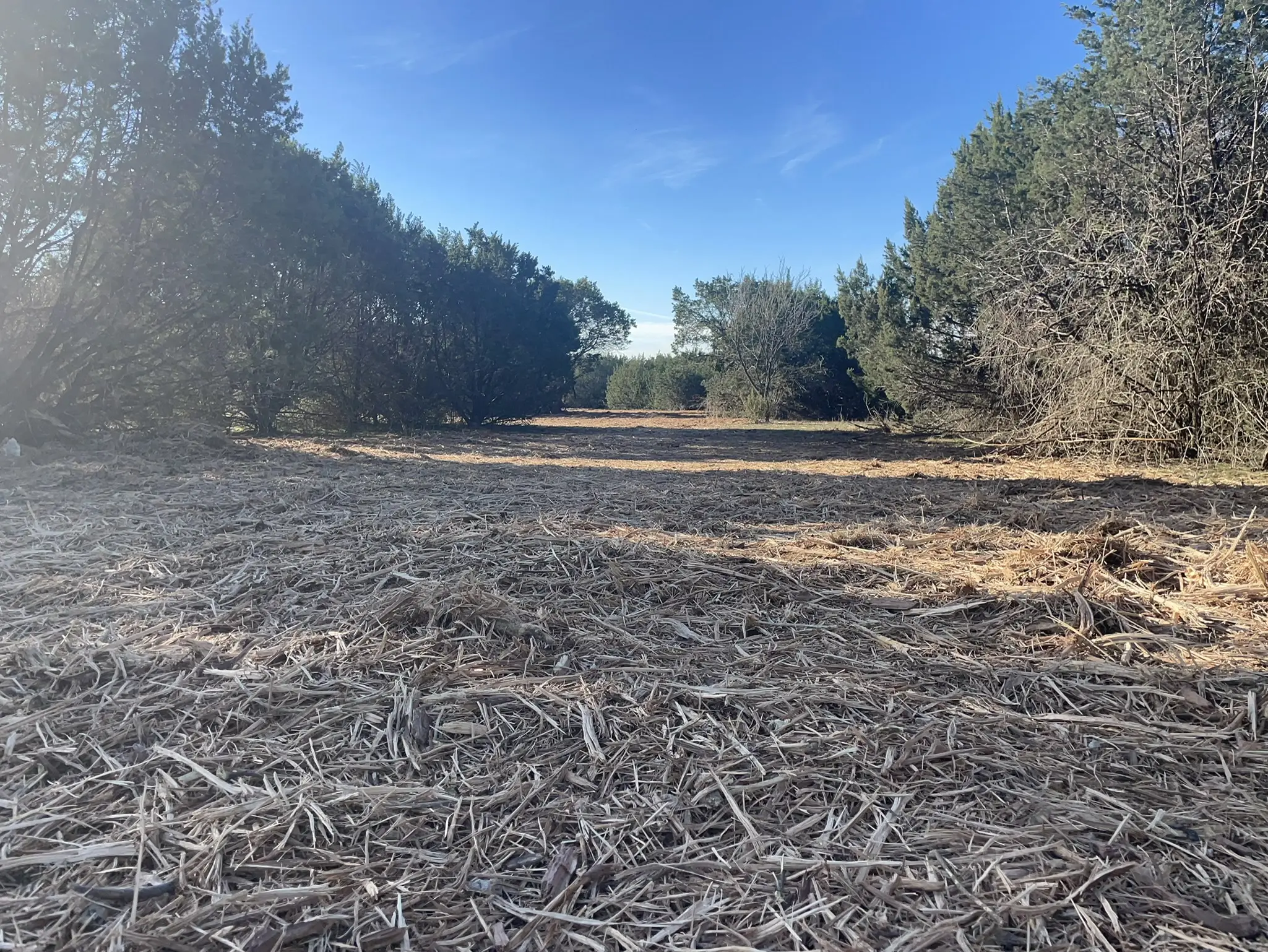
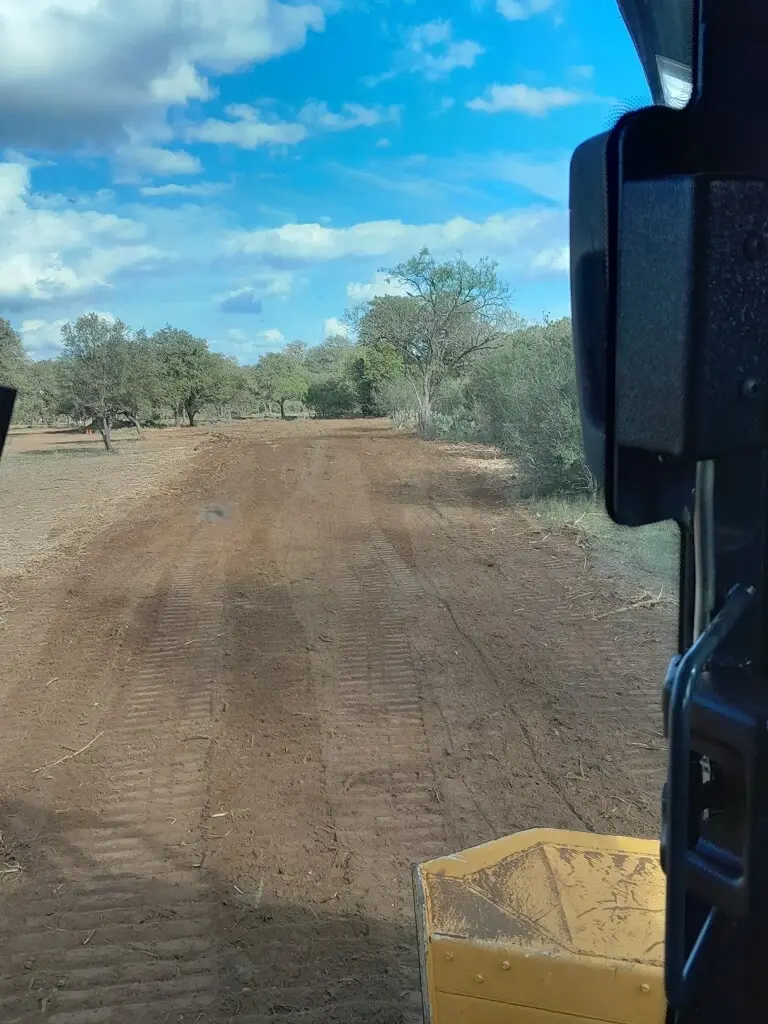
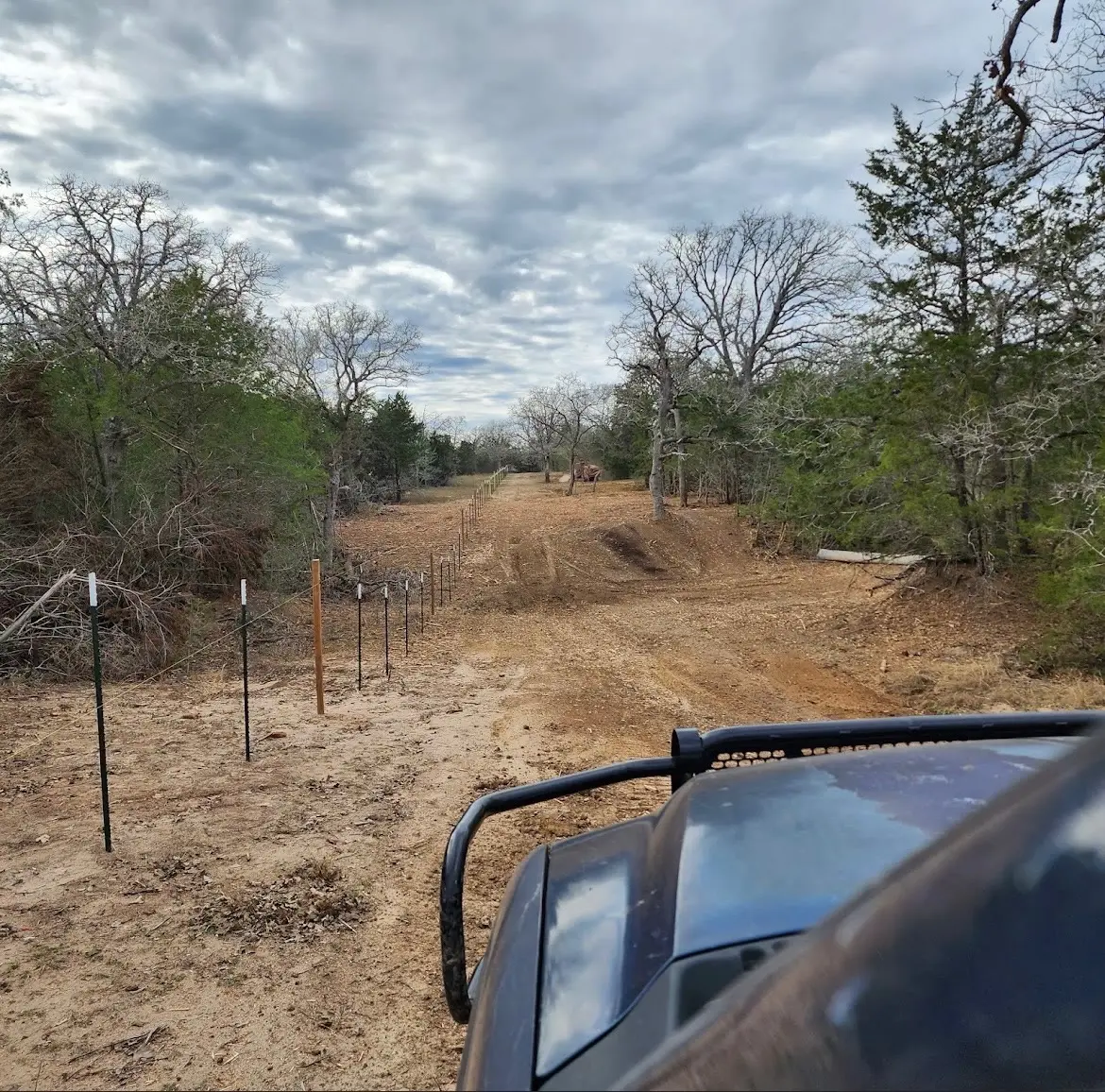
Brush and cedar close in from both sides of a ranch road, scratch up trucks and eventually choke the road off. We mulch the right of way back to a clean width, and the mulch stays on the ground to protect the shoulders from washing.
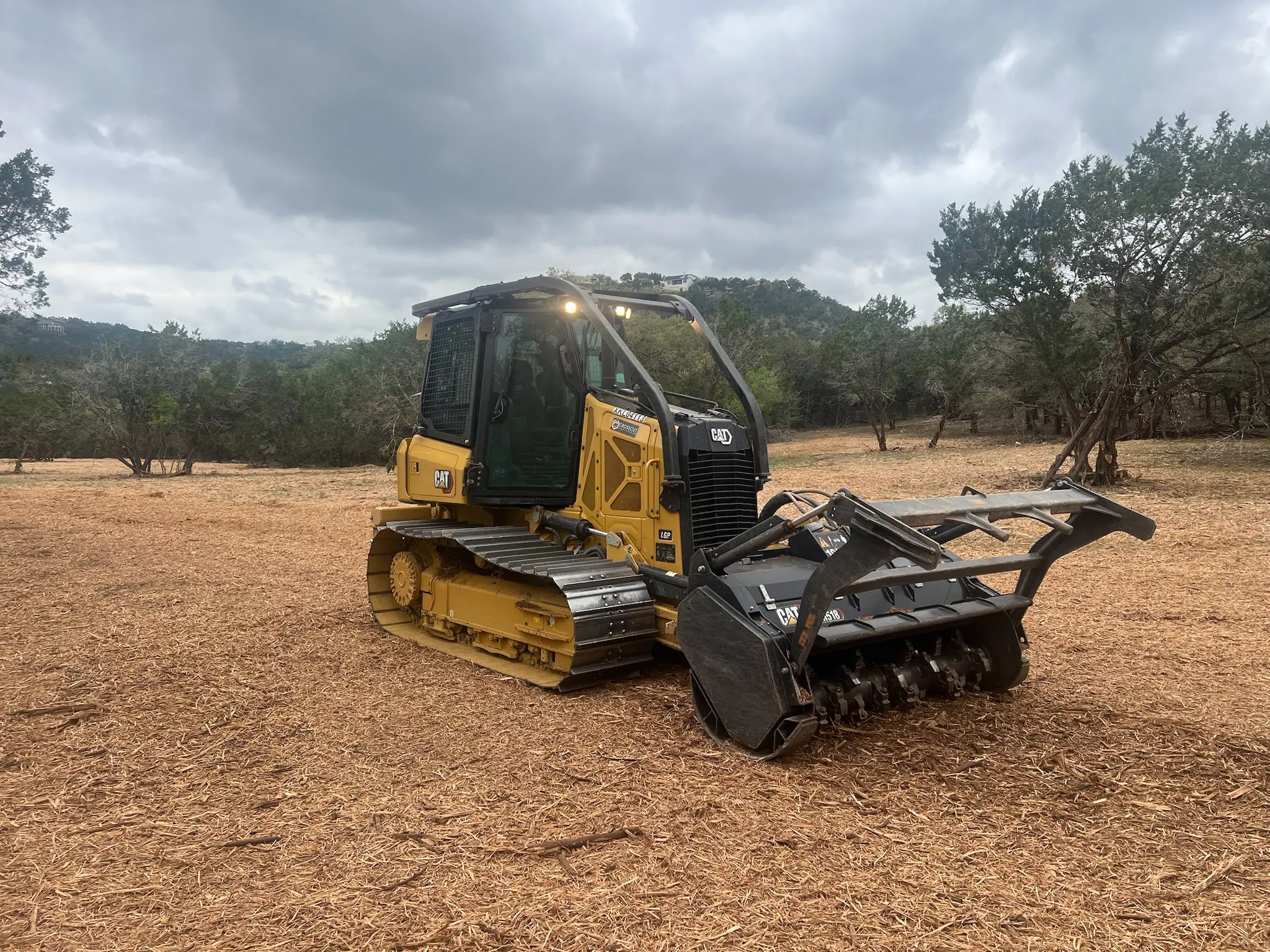
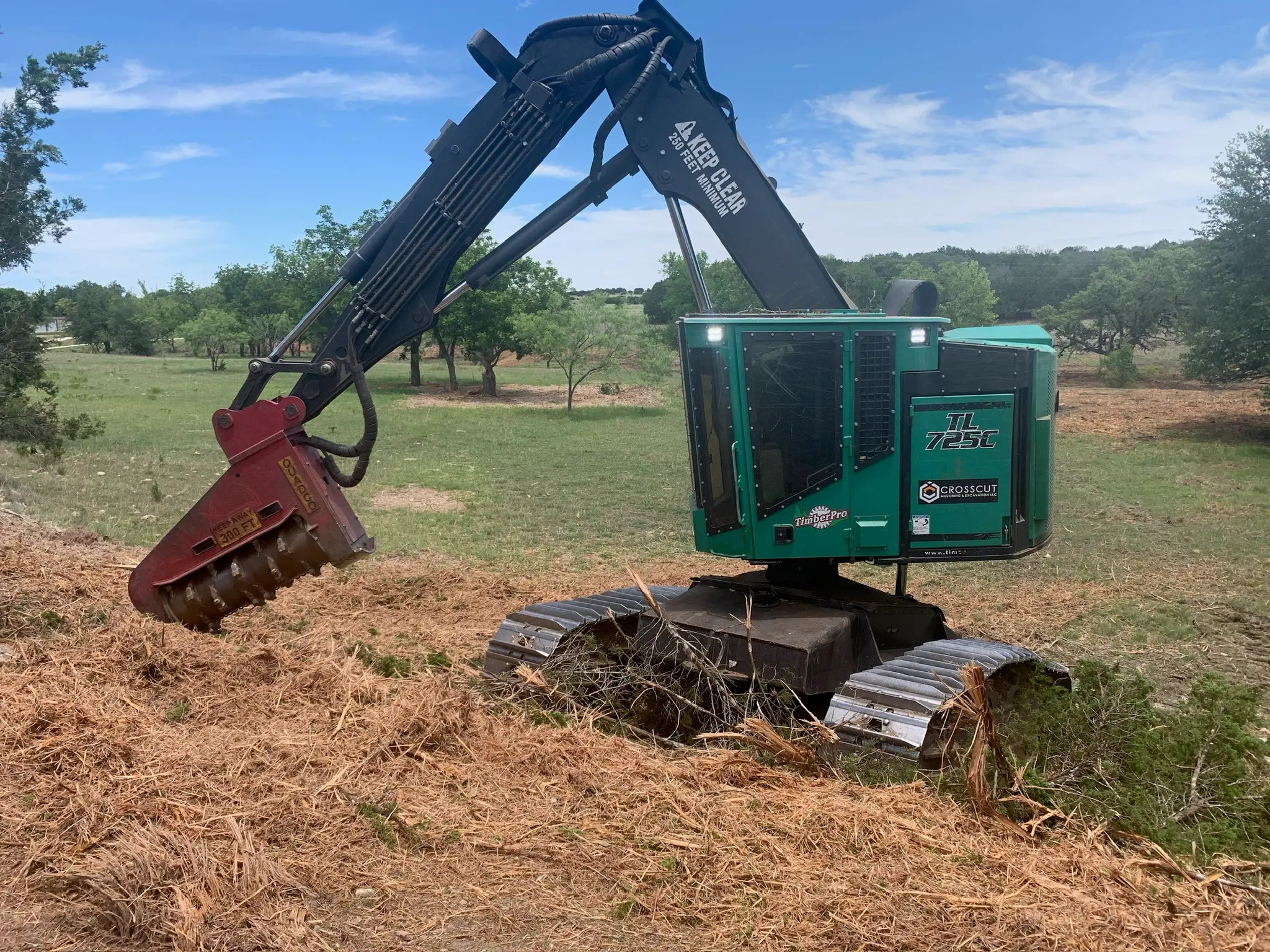
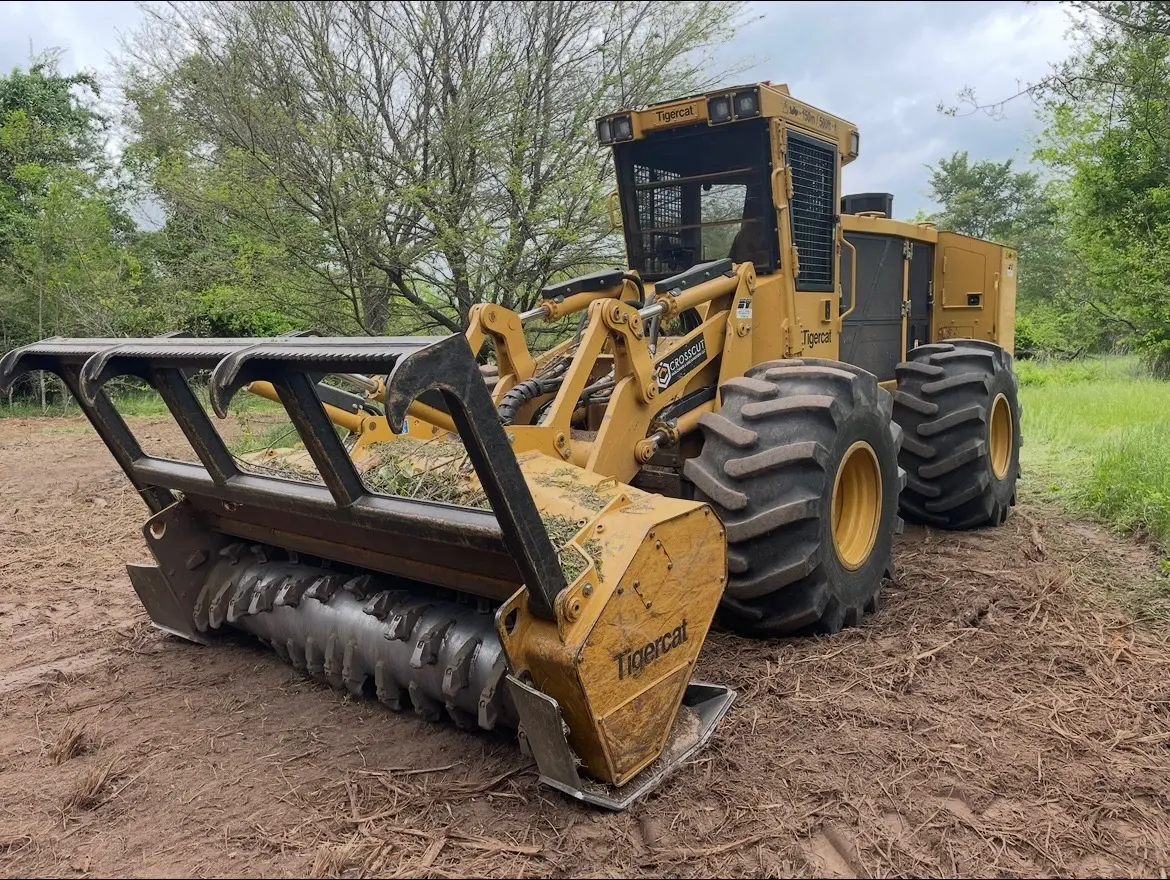
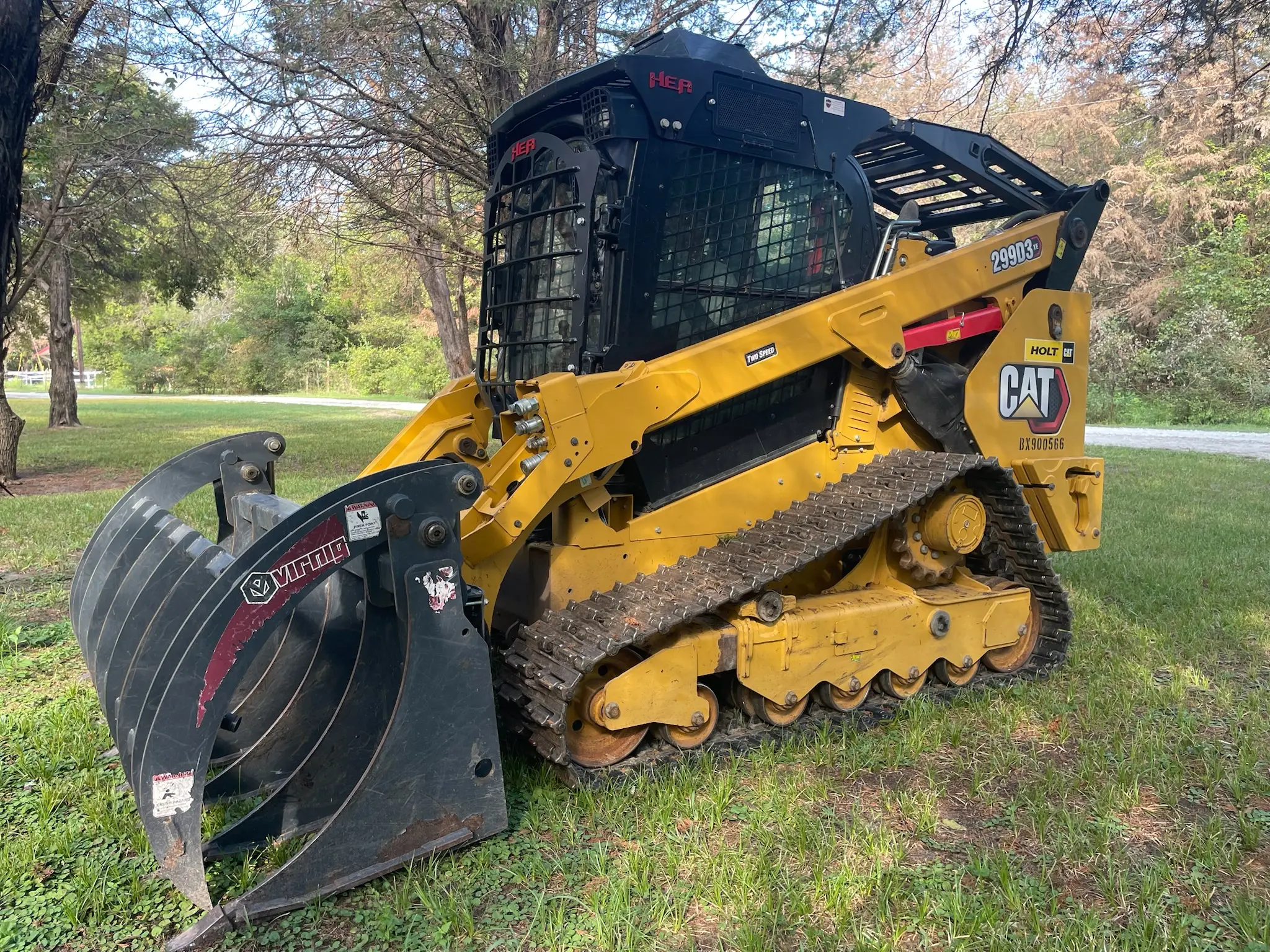
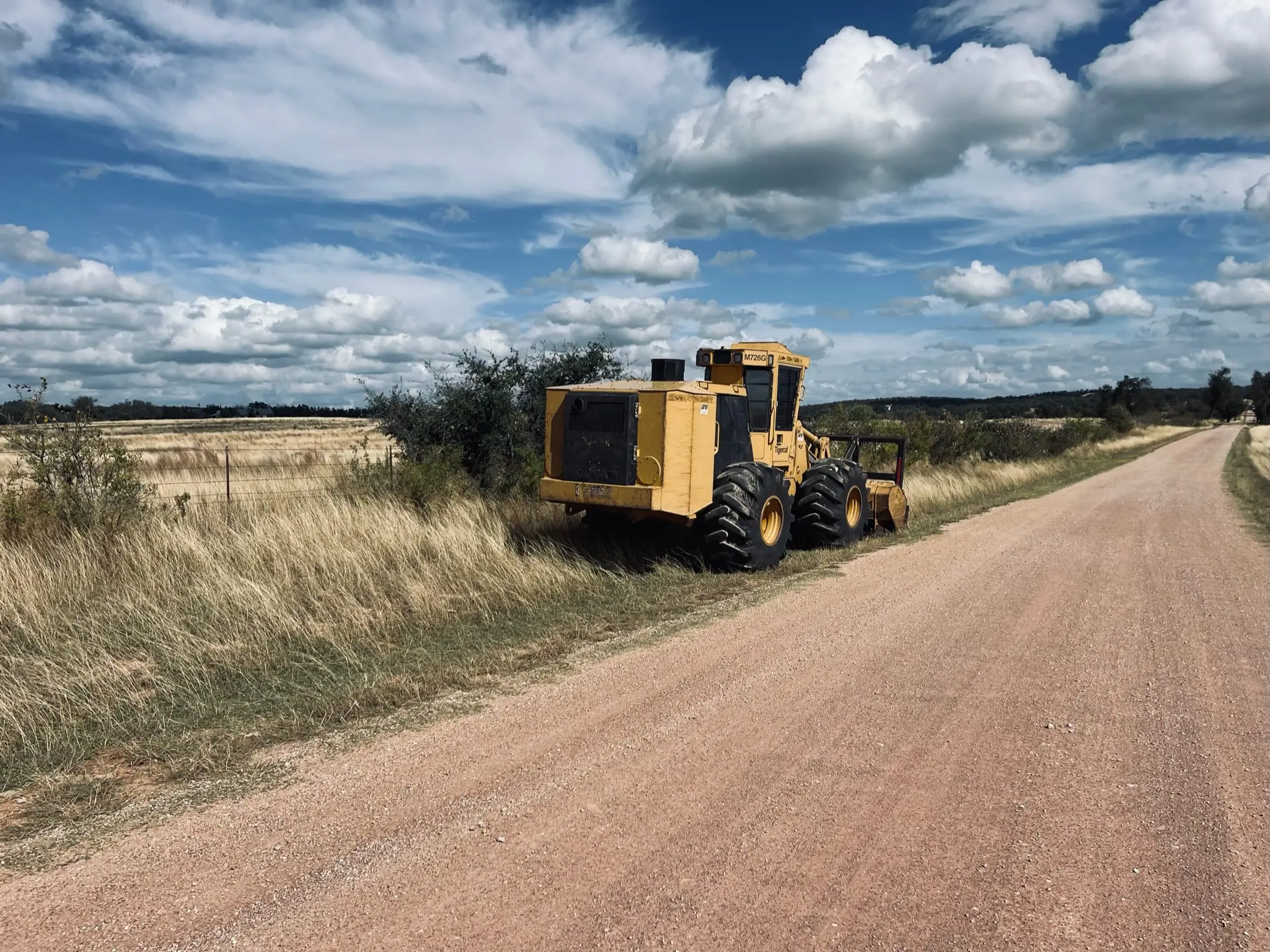
On long, open stretches the Tigercat M726G works the edges. Tight, winding roads and steep sections go to the Cat D1 dozer mulcher or the Timberpro TL725C, which can reach out from the roadbed with its boom.
Grading, reshaping and re-rocking
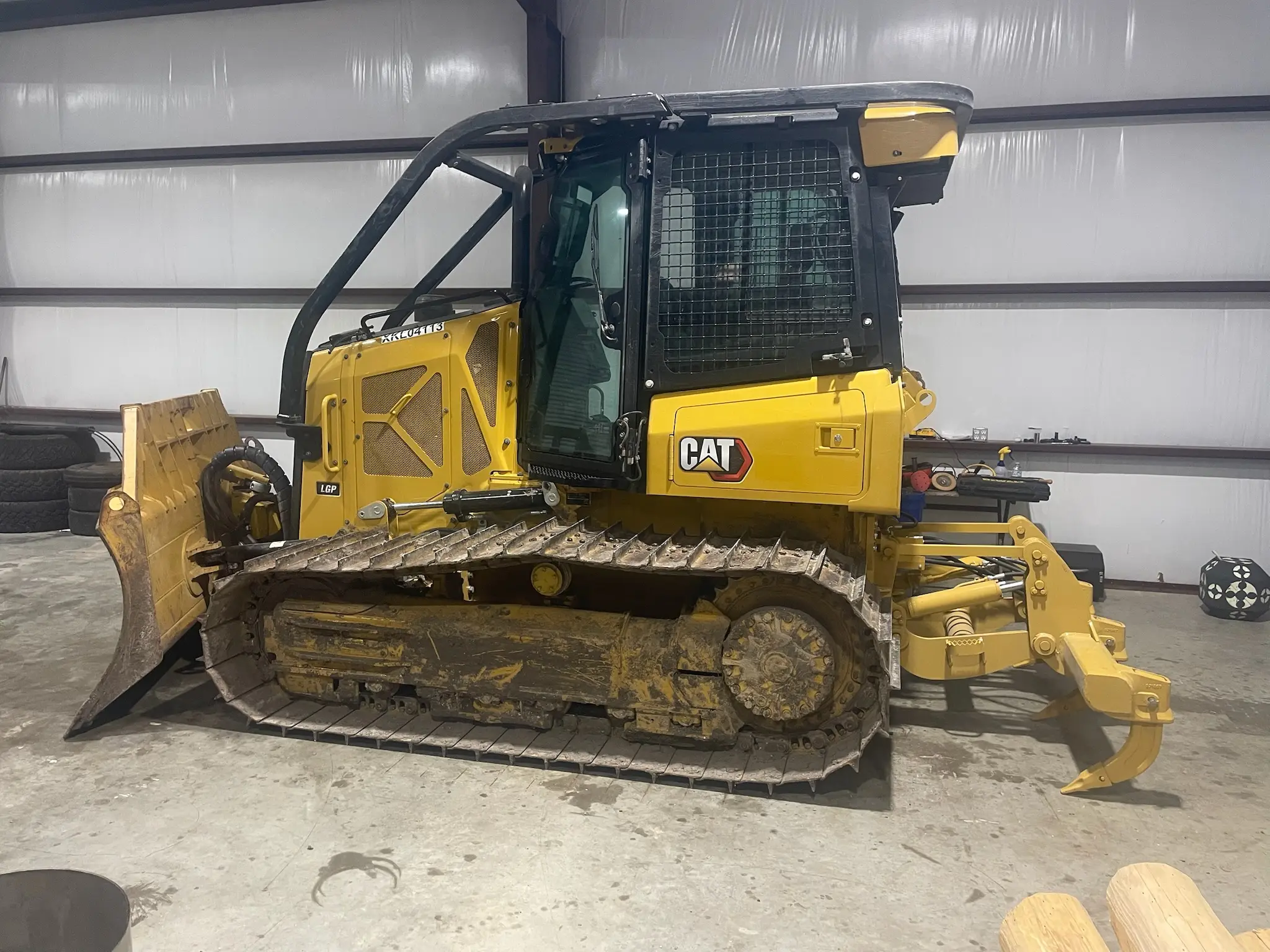
Interior ranch roads take a beating. Thin soil over rock washes out, and clay ruts deep and holds it. The Cat D1 dozer with a blade regrades the road and reshapes the crown and ditches so water runs off instead of down the middle.
Where the base has worn through, we repair it and add rock. Rock crushed on your own property can sometimes go back into the road instead of being trucked in.
The goal is a road your truck and trailer can use in any season, not just in dry weather. Getting the shape right does more for that than piling on more rock.
Washouts, ruts and culverts
Most road damage starts with water. We repair washouts and ruts, clean out and fix existing culverts, and add new ones where water keeps crossing the road.
Low-water crossings are part of the job too. Sizing a crossing for how hard the creek runs after a storm is what keeps it from washing out again the next time.
Culverts that have filled with silt or debris act like no culvert at all. Cleaning them out and reshaping the ditches that feed them is often the simplest fix on the whole road network.
Roads that let you work the rest of the land
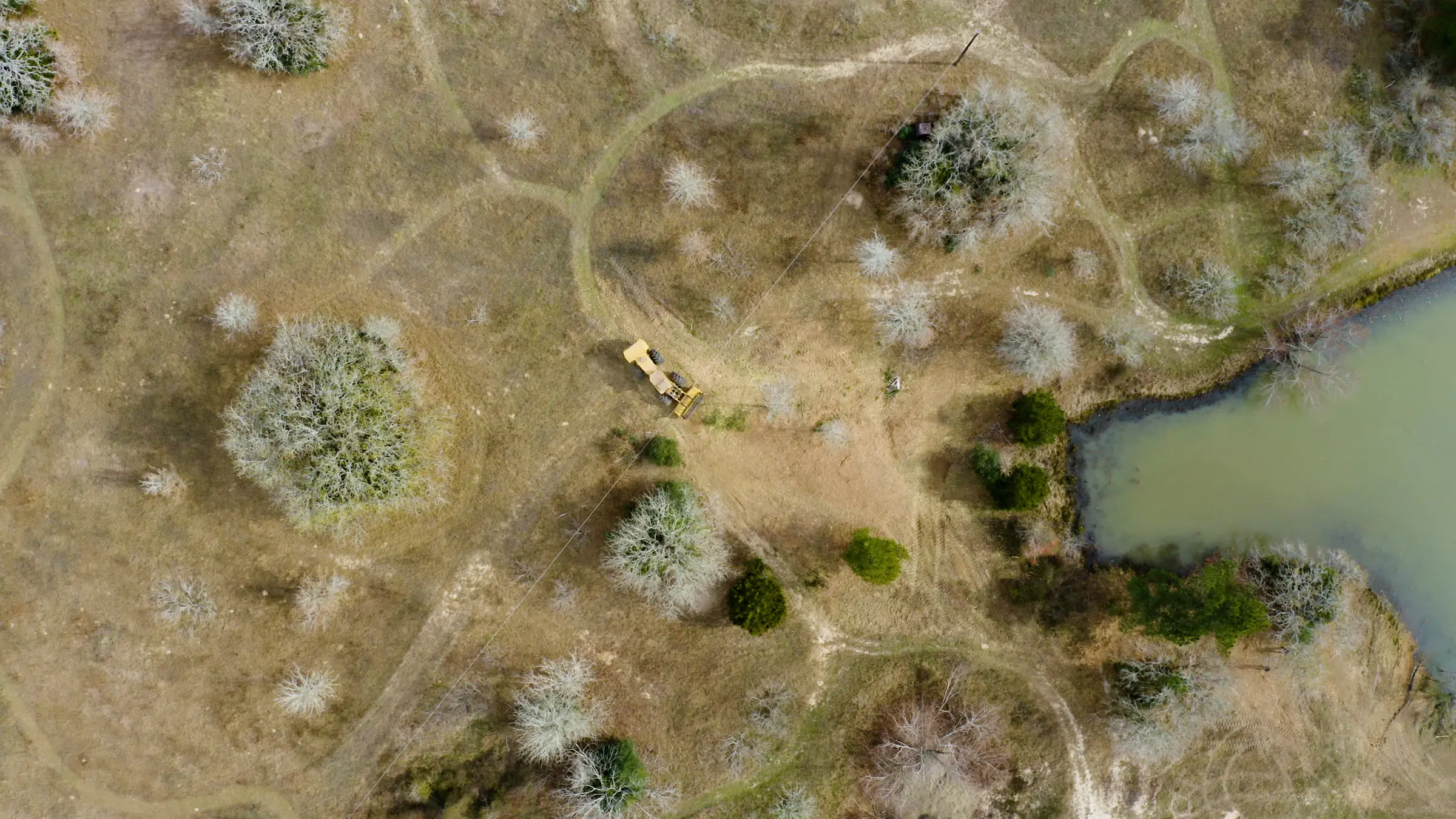
On a larger property, the interior road network is often what makes the rest of the land usable at all. Fence lines, pastures, ponds and hunting areas are only as good as your access to them, and a road a trailer can’t get down might as well not be there.
Ranch roads also serve as fire breaks and as the way in for anyone fighting a fire on your land. A clear, wide road is worth more on that day than on any other.
We can take care of the roads along with fence line clearing, trail mulching or pasture work, so the whole property gets opened up at once while the machines are already on site.
Emergency access matters too. A fire truck or ambulance needs a road it can actually use, and keeping your interior roads clear and passable is part of being ready for a bad day.
Staying ahead of the brush
Ranch roads don’t stay clear on their own. Birds and wind reseed the edges, and cedar and mesquite start pushing back in within a few seasons. Catching it while the regrowth is small keeps the job quick and the road the width you want.
The owner who walks your roads with you can point out the stretches that will close in first and the spots where water is starting to cause trouble.
Keeping the edges mulched rather than scraped also helps. Covered shoulders hold together better in heavy rain, and the road keeps its shape longer between visits.
What the job can include
- Ranch road and right of way mulching
- Ranch road grading and reshaping
- Road base repair and re-rocking
- Washout and rut repair
- Interior access road maintenance
- Culvert and drainage upkeep
- Low water crossing work