Gravel roads, driveways and culvert installation give landowners in Bertram, TX and across Central Texas access that stands up to the weather, heavy equipment and daily wear. Whether it’s a full private road or a short drive into a home or shop, we build a solid surface on proper grading and base material.
A gravel road isn’t just stone dumped on dirt. Done wrong, it washes out after the first good rain. That’s why we handle the job from the ground up, including culverts to manage water and compaction to lock it in. An owner walks the route with you first to see where the water goes and where the road should run.
How we build a road
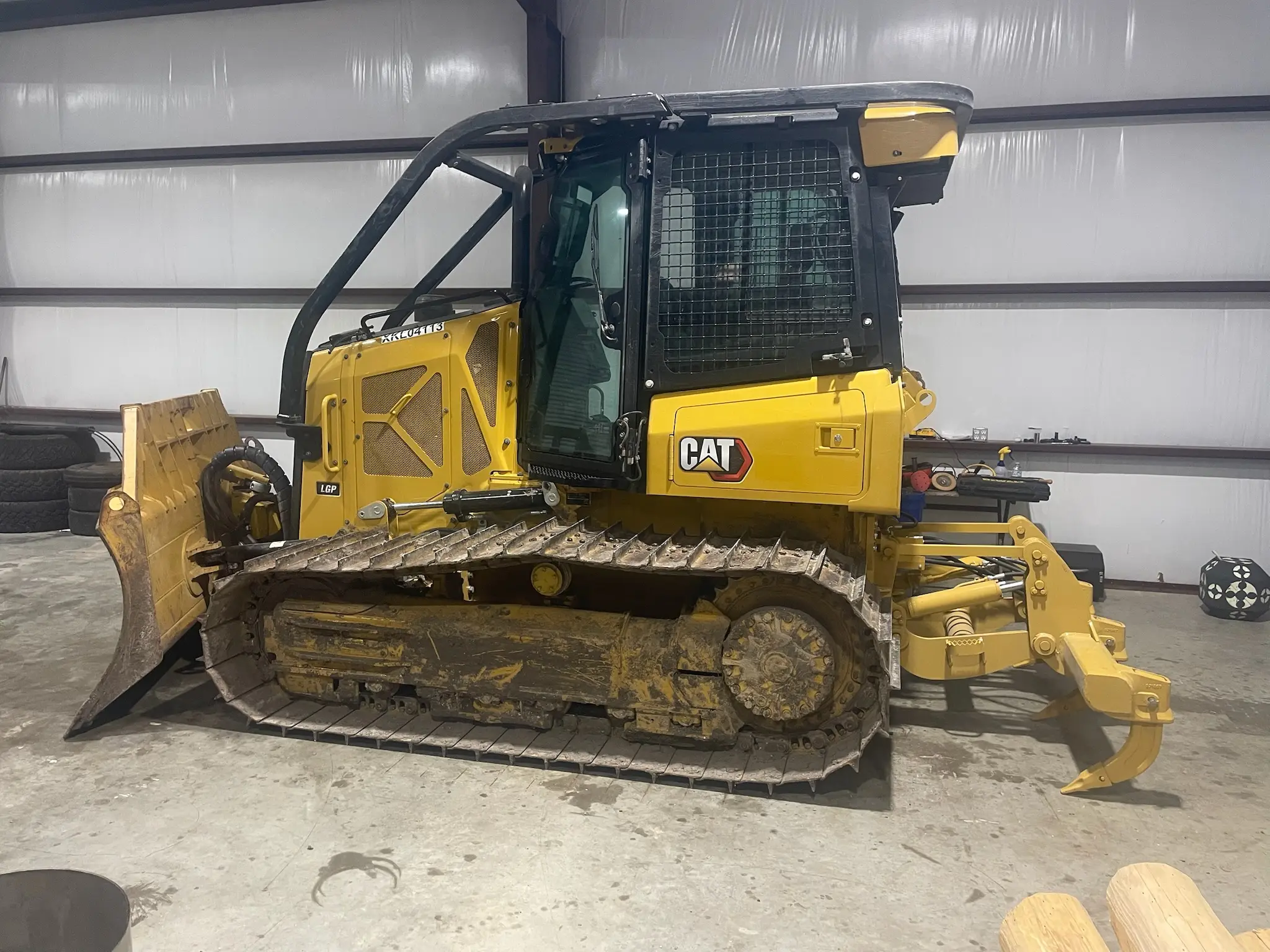
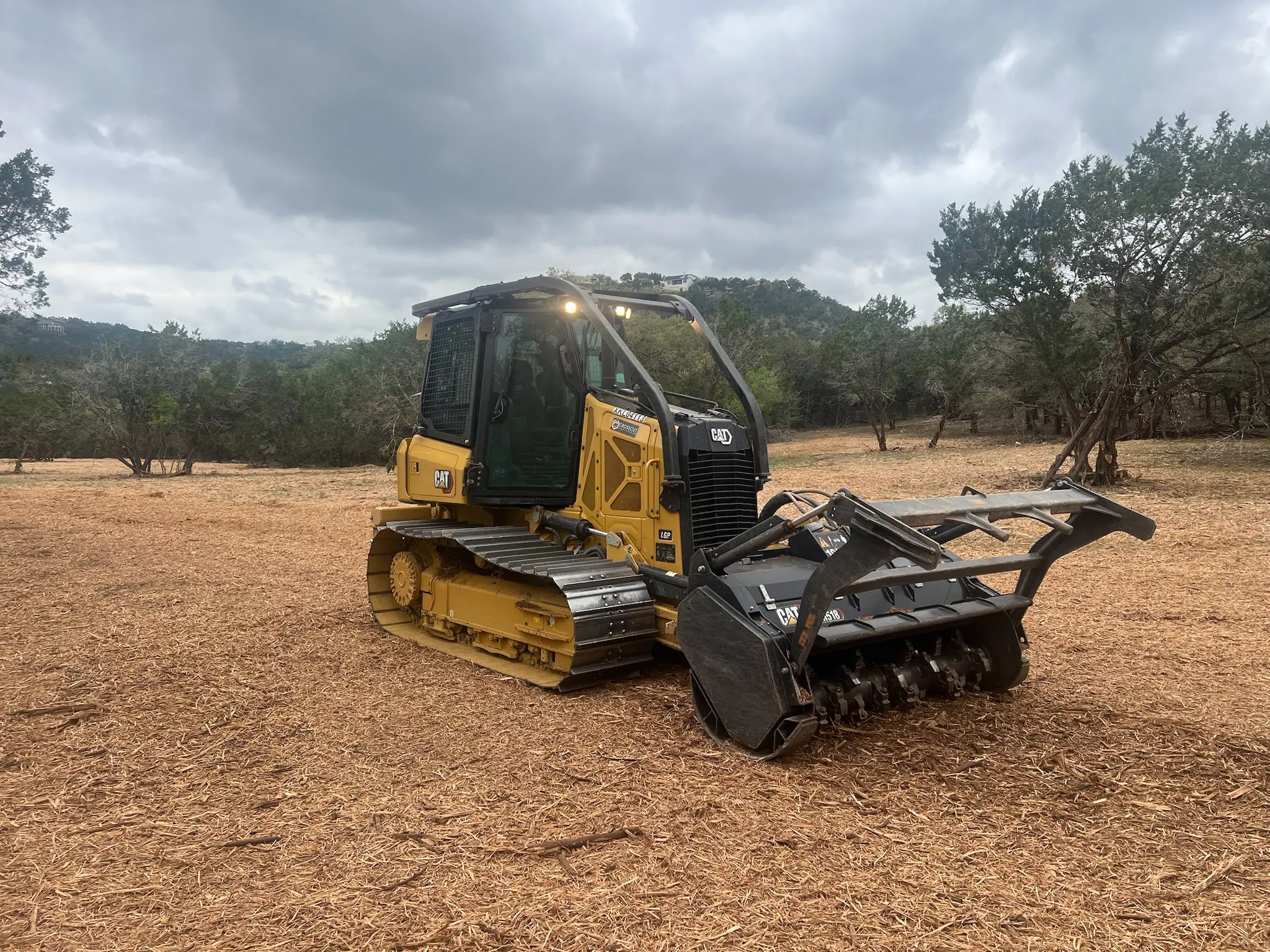
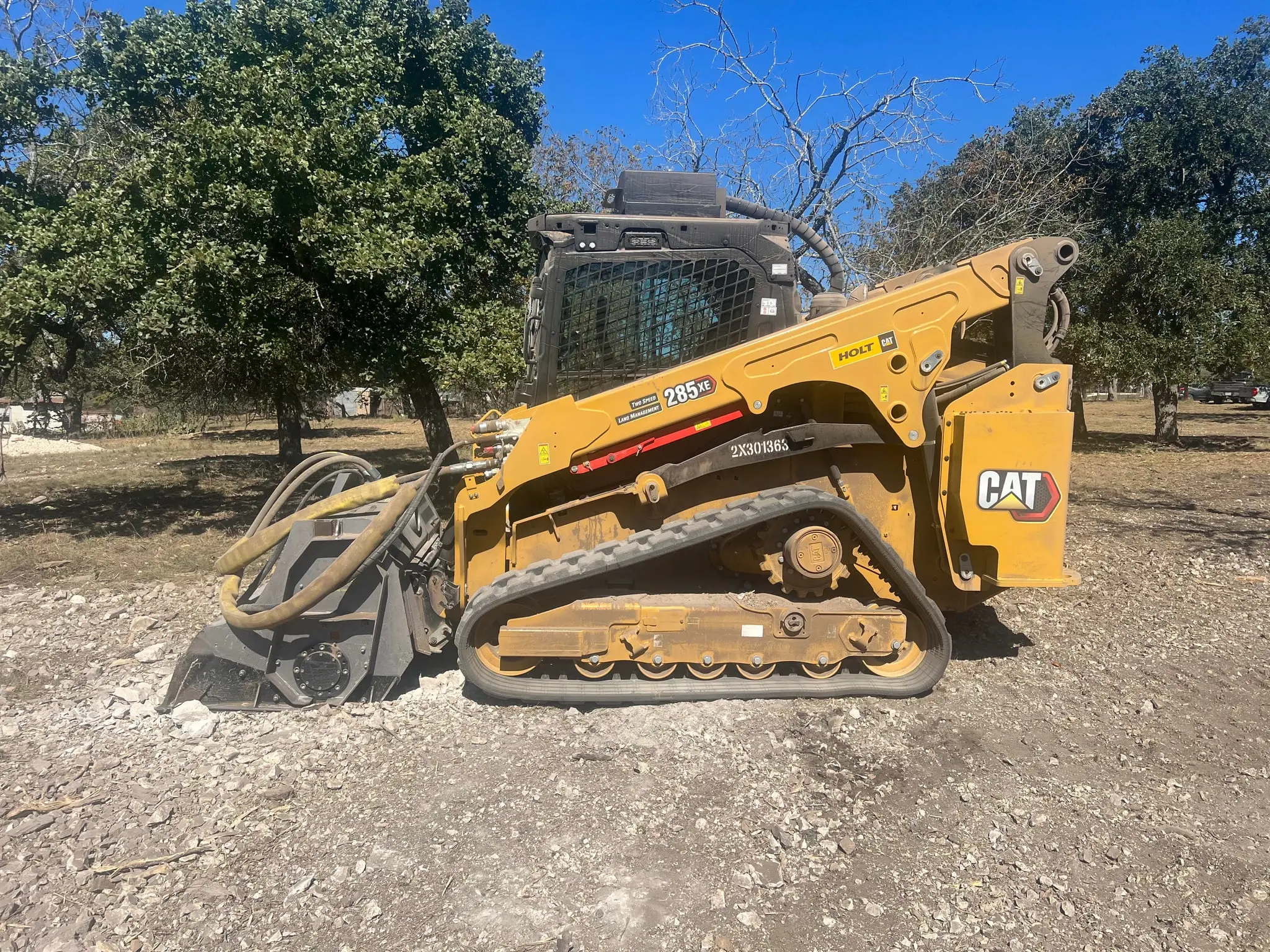
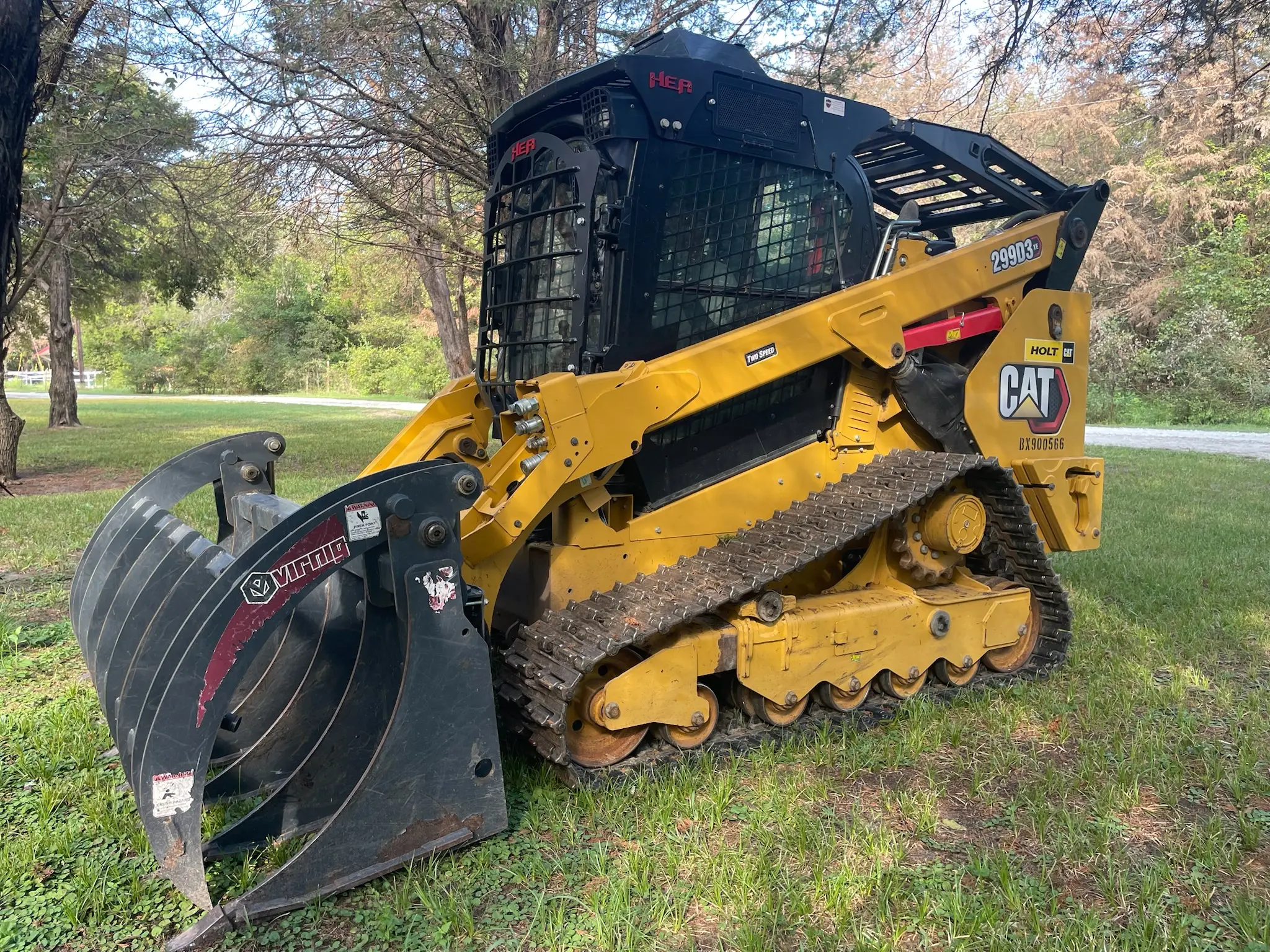
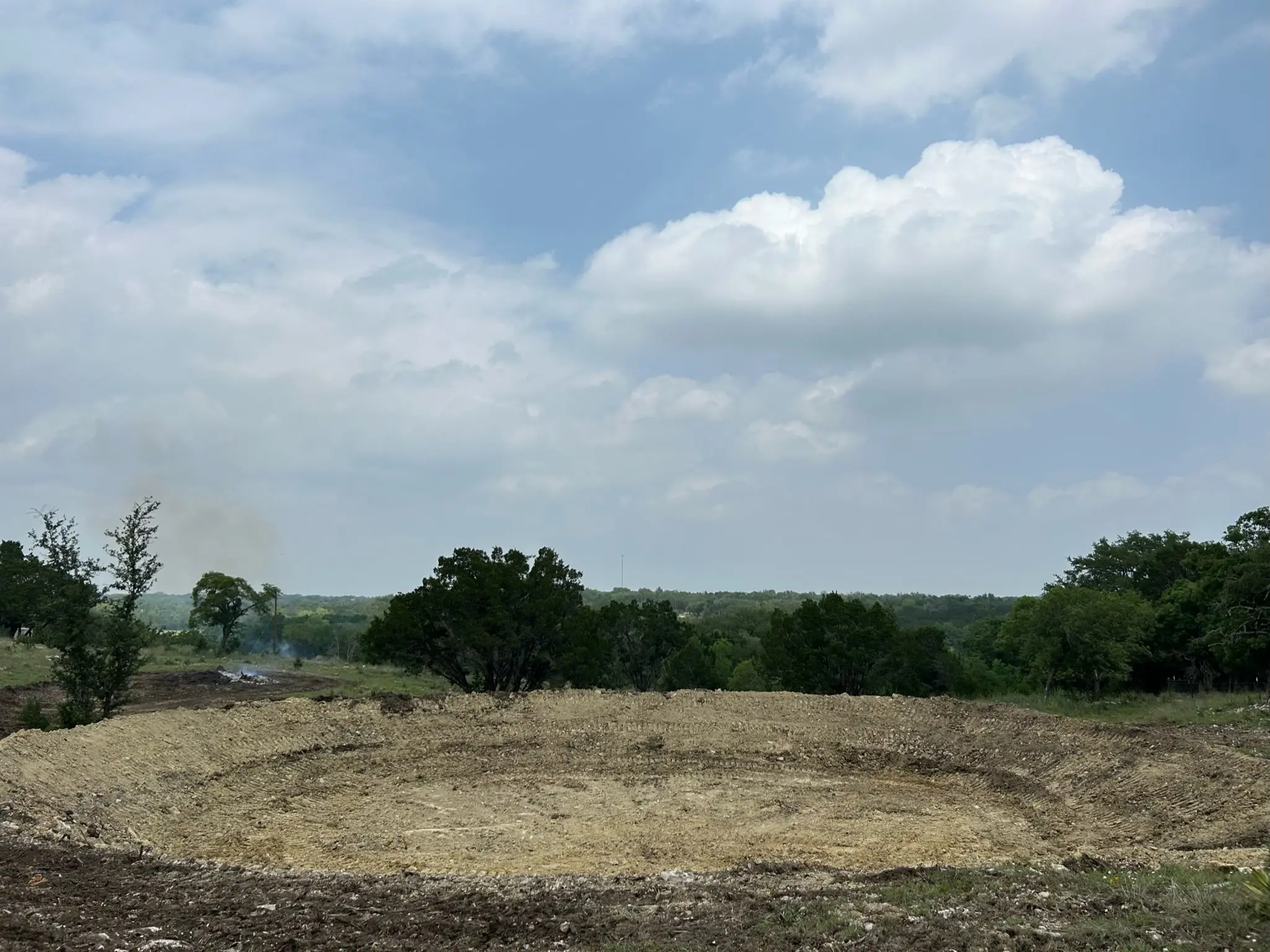
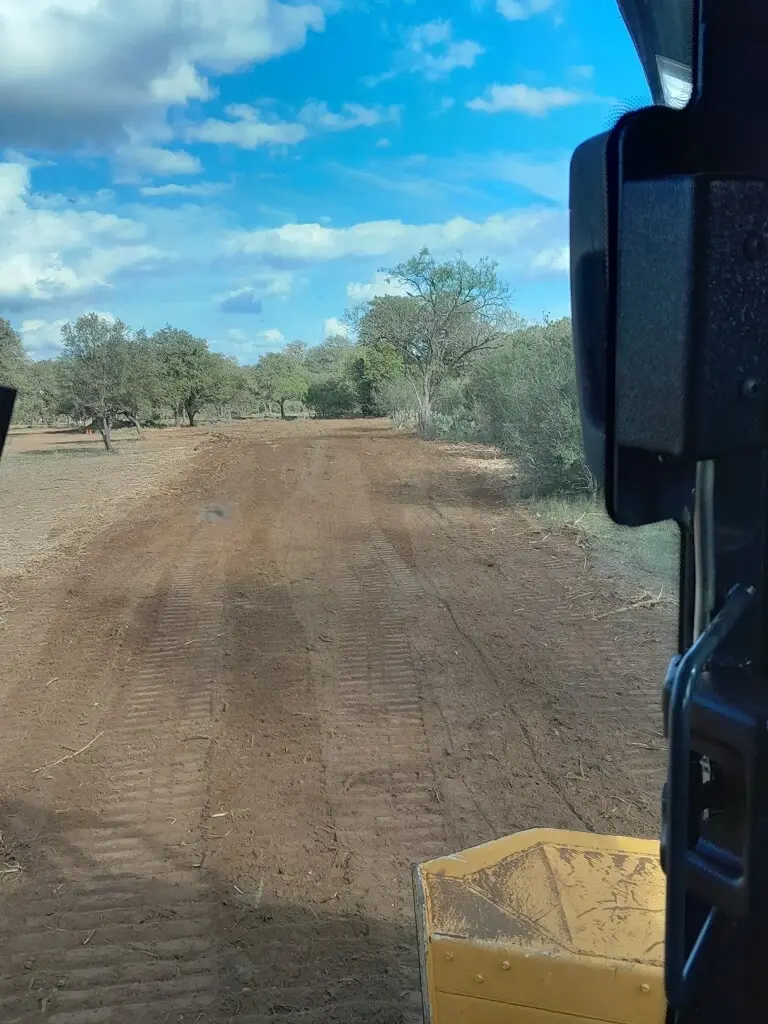
Every road starts with prep and grading. The Cat D1 dozer with a blade shapes the roadbed and the ditches, and the Cat skid steers move and spread material.
Base goes down in layers, and each layer is compacted before the next one goes on. That’s what keeps a road from rutting the first time a loaded truck uses it in wet weather.
- Site prep and grading
- Road base or gravel selection, such as limestone or granite
- Installation in layers with compaction
- Ditch shaping and slope management
- Culvert placement for drainage
Why culverts matter
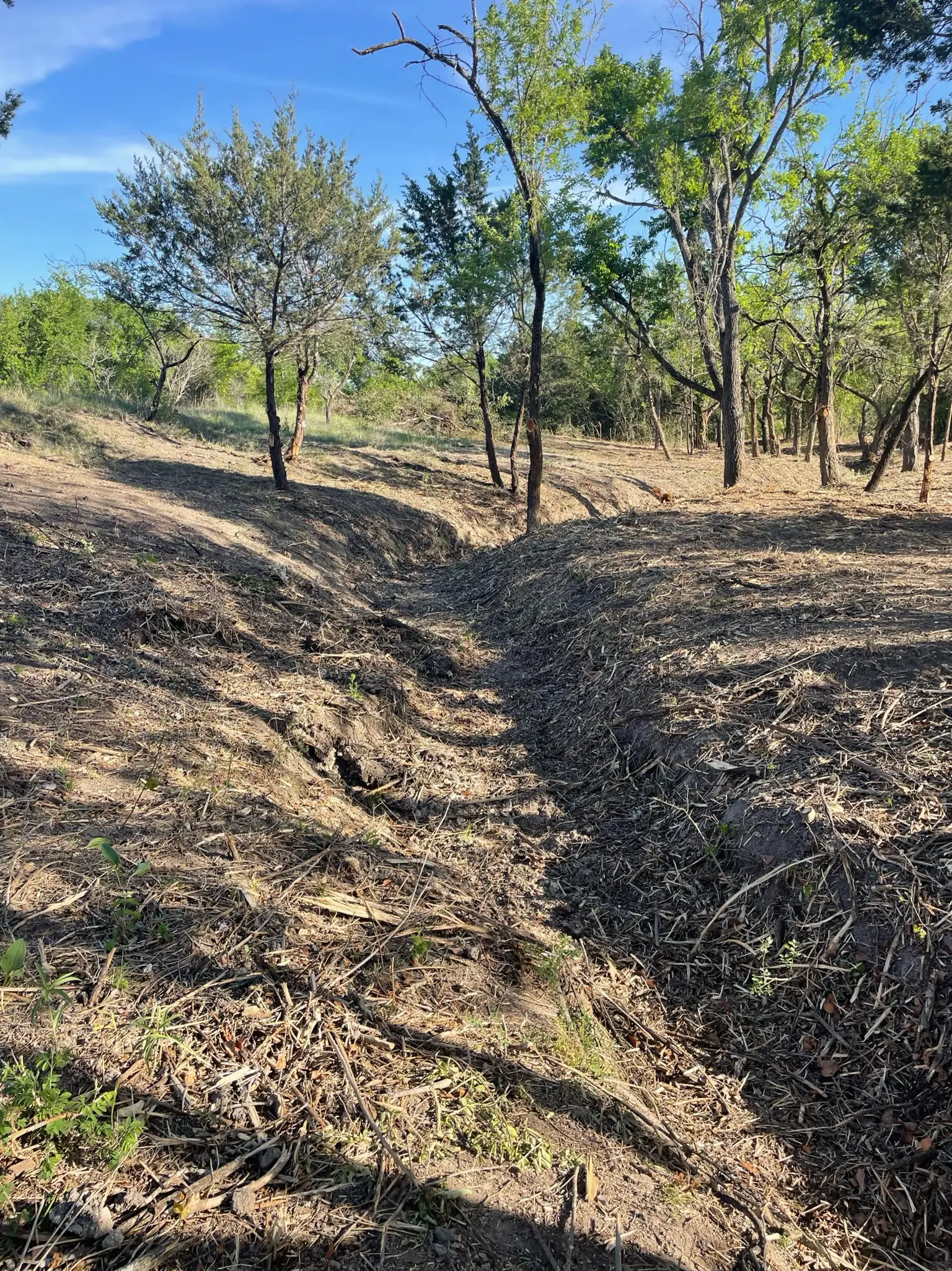
Texas storms don’t mess around. Without proper drainage, water pools, erodes the edges and washes out the gravel you paid for. We install culvert pipe in low spots and water-prone areas to carry runoff safely under the drive, not across it.
Culverts are sized and placed for how water moves off your land. An undersized crossing can wash out in a single storm. Galvanized and HDPE pipe are both options.
Culverts need room to drain at both ends, too. We shape the ditch into and out of the pipe so water reaches it instead of running around it, and so the outlet doesn’t cut a new gully below the road.
Driveways, loops and parking pads
Projects run from a quarter-mile driveway to a looping access road around the property, or a parking pad for equipment or an RV. We fit the build to your land and how you’ll use it, whether that’s a car every day or a loaded trailer a few times a year.
Width, turnarounds and where the road meets the county road all get worked out on the walk-through. A trailer that can’t swing into the drive is a problem you only want to solve once.
Where your site has rock, we can crush it in place and use it in the base, which cuts down on what has to be trucked in.
Parking pads and equipment areas get the same treatment as the road: graded to drain, built up in layers and compacted, so they don’t turn into a mud hole the first wet week.
Clearing the route first
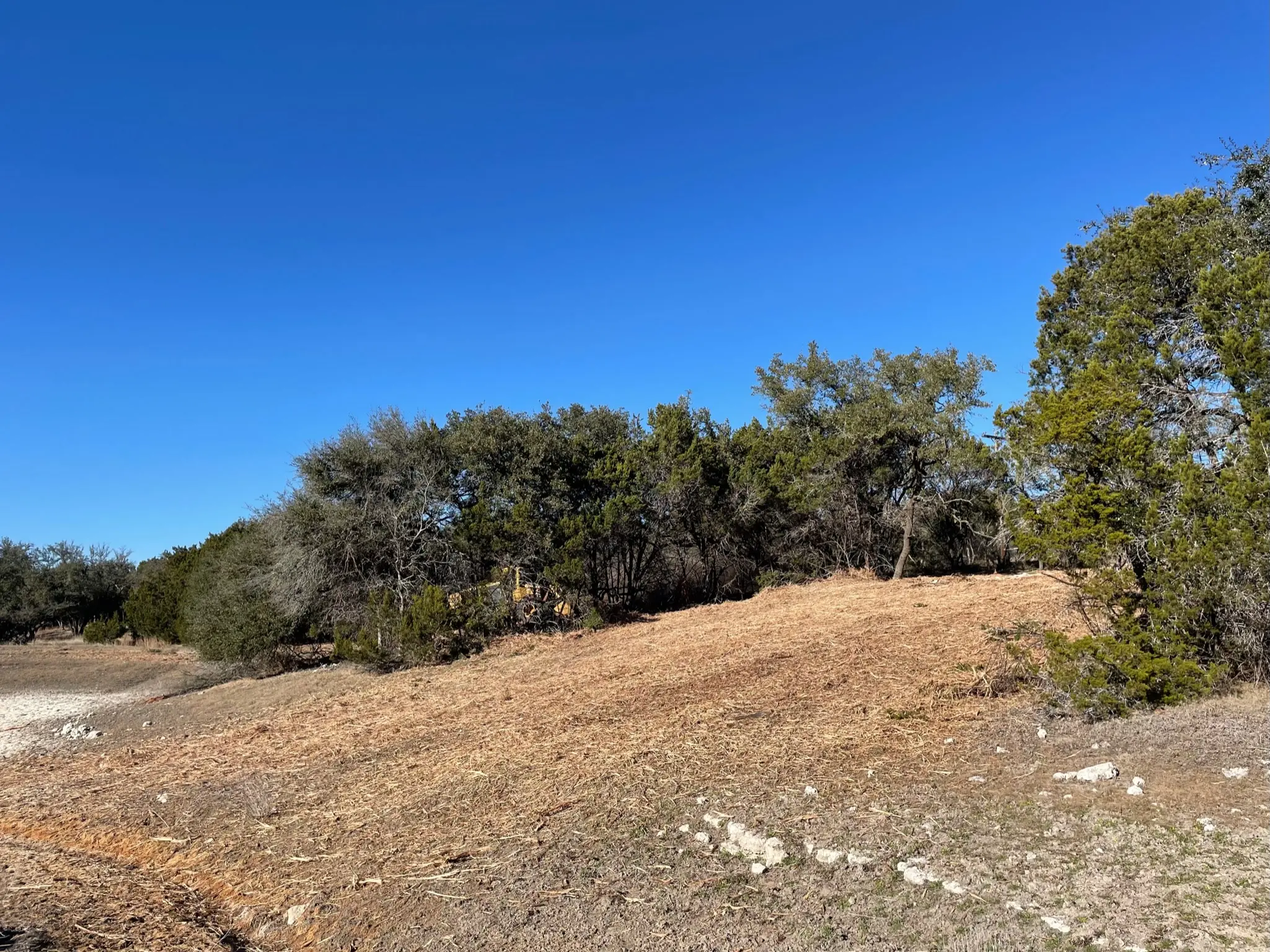
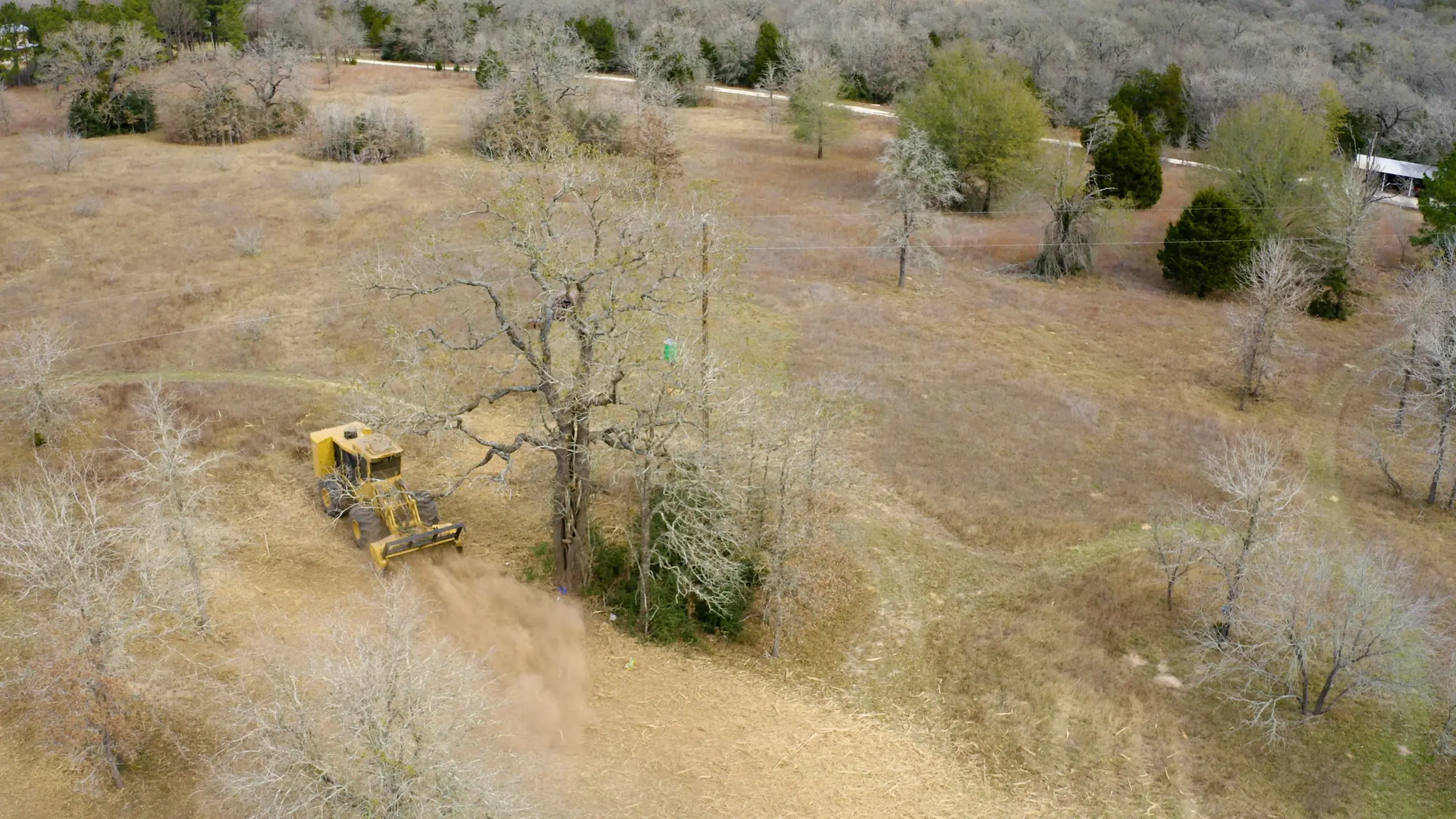
A new road through brush or cedar starts with clearing the right of way. Because we’re a land clearing crew first, we mulch the route open, take out the stumps in the roadbed and leave the edges covered so they don’t wash.
That also lets us lay the road where it makes sense on the ground, around the trees you want to keep and along the line water naturally drains, instead of fighting the slope.
A road laid out with the land drains better and needs fewer culverts. That’s part of why we like to walk the route with you before anything gets cut.
Fixing the road you already have
If your current gravel road is full of potholes or keeps washing out, it usually comes down to grading and drainage. We can re-grade and rebuild it with the right material and add the culverts and ditches it was missing.
Low-water crossings take a beating after heavy rain, and we work on those too. The idea is to build it once so you aren’t calling someone again in six months.
Rebuilding usually starts by finding where the water is going. Once the crown, ditches and crossings are right, the new gravel stays where it belongs and the potholes stop coming back.
What the job can include
- Gravel road construction
- Driveway installation and rebuild
- Culvert installation and sizing
- Ditch shaping and slope management
- Low water crossing work
- Parking pads for equipment or RVs
- Right of way clearing for new roads
- Drainage and erosion control