
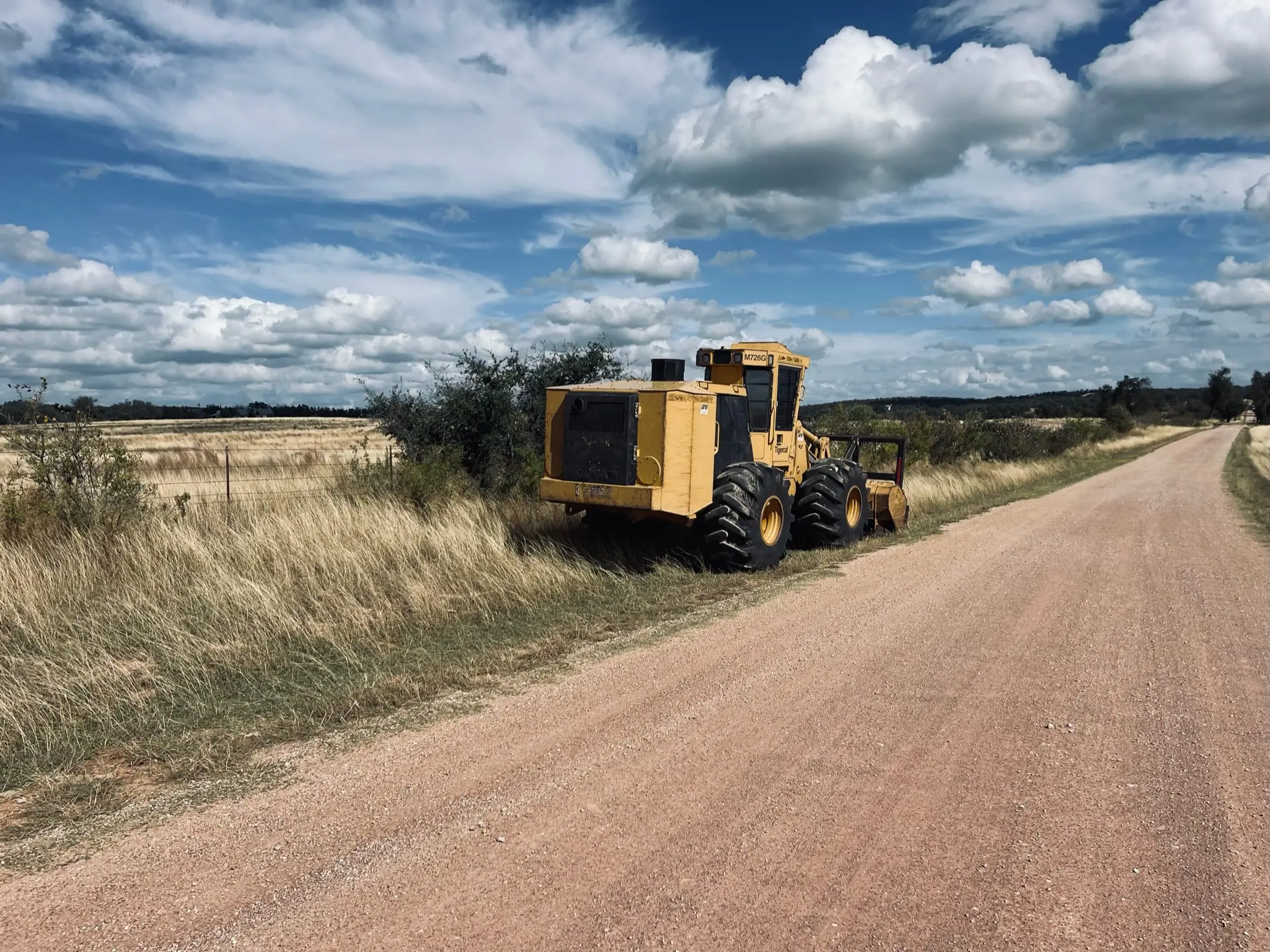
Mason County sits on the western edge of the Llano Uplift, where granite and sandy soils meet limestone hills. The Llano River crosses the county south of Mason, and the James River runs through rugged country near the Eckert James River Bat Cave Preserve. Fort Mason overlooks the town square, and the Mason Mountain Wildlife Management Area and the county’s topaz country show how wild much of the land still is.
Land clearing in Mason County is mostly a mesquite and brush job, with live oak and post oak mixed in. Ranchers want pasture back, deer hunters want lanes and openings, and owners along the Llano and James need roads and crossings that survive floods. Bare sand erodes quickly, which is why mulching that leaves cover on the ground is so often the right call here.
Communities we work in Mason County
- Mason
- Pontotoc
- Art
- Katemcy
- Streeter
Granite sand and shifting riverbeds
Mason County’s sandy granite soils drain fast and wash away easily, while the limestone to the south is shallow and rocky. Loose sand, rock outcrops and shifting river beds need different planning than limestone country, including erosion control once the brush is gone.
The Llano and James rivers have wide sandy beds that shift with every flood, and ranch crossings need to handle big water.
Deer country and long ranch roads
The work here includes mesquite grubbing and pasture restoration, wildlife and hunting lanes, fence line clearing, ranch roads, and river crossings along the Llano and James.
The John Deere dozer with root rake grubs mesquite out of sandy pasture, the Cat 285 and 299 skid steers crush granite where a pad or drive needs base, and the Cat D1 dozer with blade shapes roads and crossings.
Floodplain, oak wilt and burn bans
Most of Mason County is unincorporated. Floodplain rules may apply near the rivers, and oak wilt guidance applies to the county’s live oaks and post oaks: we avoid wounding oaks February through June and paint wounds year-round. Mulching also keeps projects moving through county burn bans.