
Mills County is quiet, open ranch country on the northern edge of the Hill Country. Limestone hills and valleys roll out from Goldthwaite along US-183 and US-84, the Colorado River forms part of the southwestern boundary, and Pecan Bayou crosses the west. The historic Regency Suspension Bridge still spans the Colorado between Mills and San Saba counties.
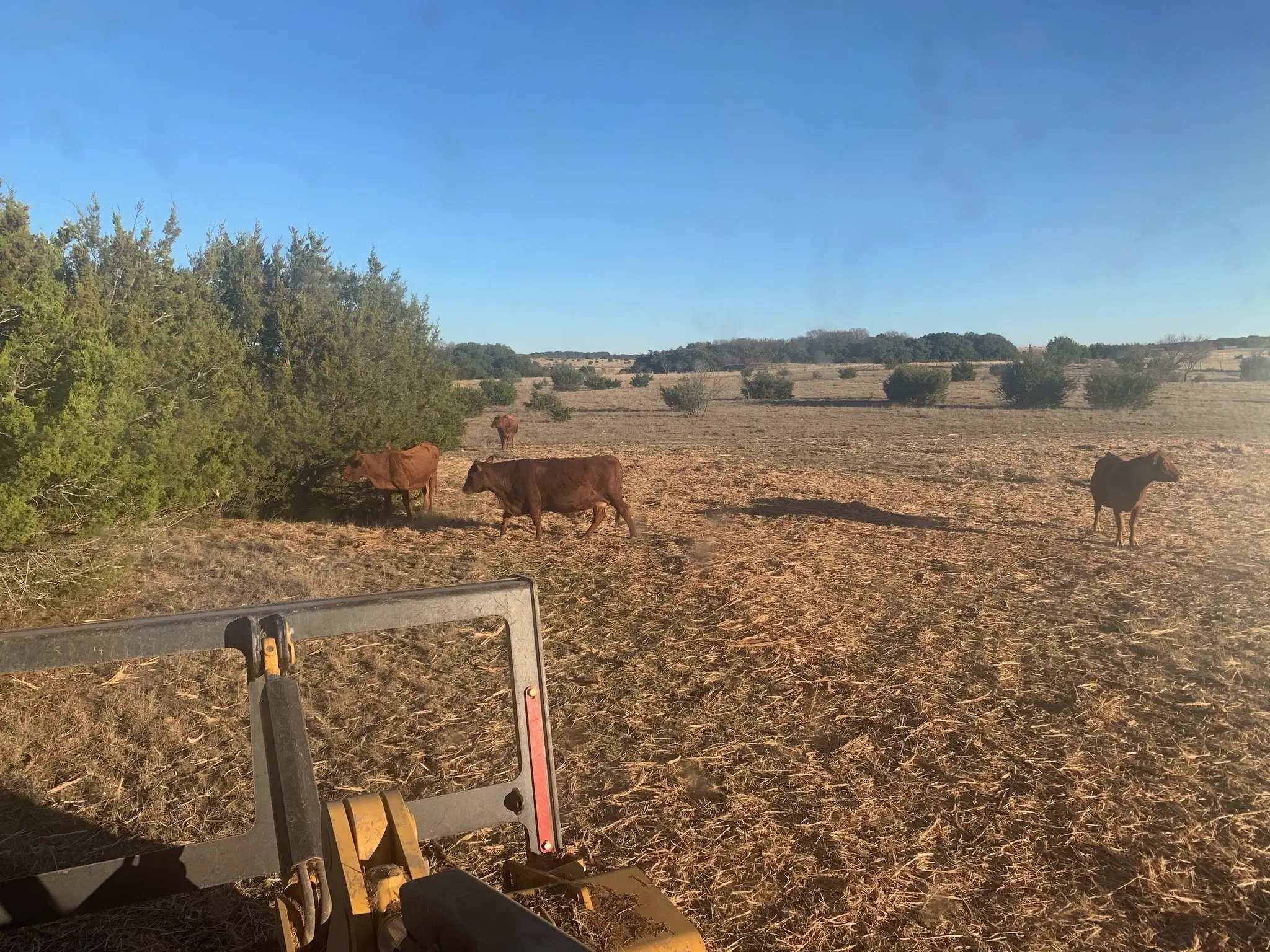
Land clearing in Mills County is mostly about grazing land that juniper and mesquite are steadily taking back. Cattle, sheep and goat ranchers around Mullin, Priddy and Star want pasture reclaimed, fence rows cleared and water developed. Hunting places need lanes and openings, and long ranch roads need upkeep after hard rains.
Communities we work in Mills County
- Goldthwaite
- Mullin
- Priddy
- Star
Shallow limestone and fast creeks
Mills County ground is mostly shallow limestone, with thin soil on the hills and deeper soil in the valleys. Cedar and mesquite spread quickly once grazing pressure drops, which is why so many ranches here are a few years behind on brush.
Creeks feeding Pecan Bayou and the Colorado River run fast after heavy rain and wash out low-water crossings, so any road or culvert work starts with how water leaves the place.
Big tracts down gravel roads
Projects here center on mesquite grubbing, cedar mulching, pasture restoration, fence line clearing, stock tank building and wildlife openings on hunting land. Most jobs are large tracts down gravel roads.
That suits the big machines. The Tigercat M726G works open cedar and brush, the John Deere dozer with root rake grubs mesquite, and the Cat D1 dozer with blade shapes tanks and roads. We plan mobilization, access and fuel before we arrive.
Permits, warblers and burn bans
Most of Mills County is unincorporated, so county tree permits aren’t usually a factor. Oak-juniper woodland in this region can still be golden-cheeked warbler habitat, and we check before clearing it. We follow oak wilt guidance on properties with oaks, and mulching keeps work moving during county burn bans.