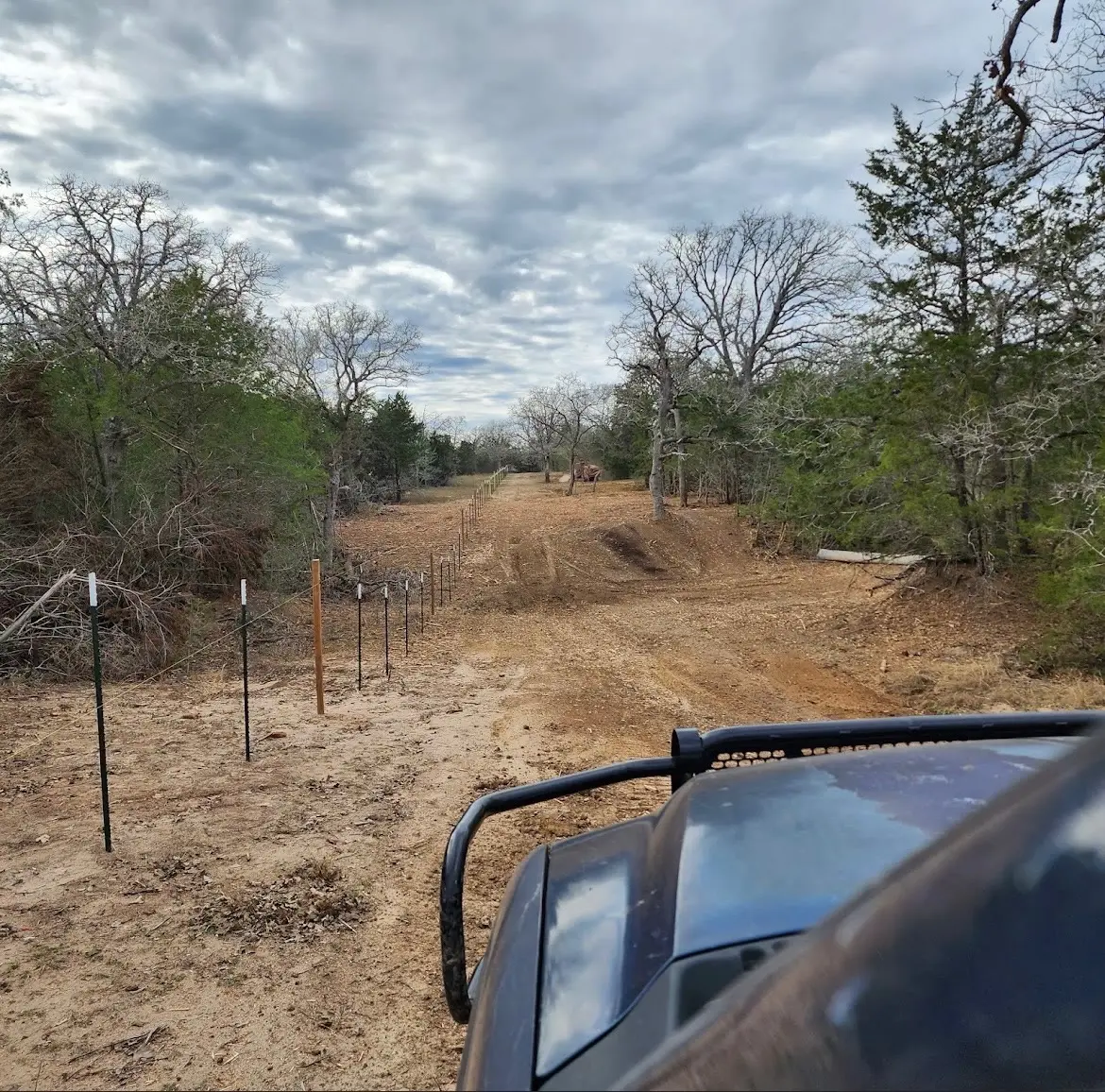
Cedar mulching and removal is some of the most common work we do in Bertram, TX and across Central Texas. Ashe juniper, the tree everyone here calls cedar, creeps into meadows and pastures, crowds out oaks and builds up wildfire fuel on ranchland until it’s necessary to mulch or remove it.
The good news is that cedar, unlike mesquite, can be mulched to the ground and likely won’t re-sprout. The mulch it leaves is good for your land and soil, which is why mulching in place is our preferred way to manage cedar. It also skips the burn piles and hauling, so the work goes on in a burn ban. An owner walks every property first and lays out where the cedar goes and which trees stay.
Why cedar has to go
Cedar soaks up water that grass and hardwoods need, and once it takes hold it shades out everything beneath it. Pastures shrink, oaks get choked and the ground under a thick stand turns bare and dry.
It’s also a fire problem. Dense cedar carries fuel low to the ground and up into the trees, and old cedar piles left from past clearing can become fire hazards of their own. Mulching takes the fuel down to the ground and leaves it as cover instead of kindling.
And because cedar holds its green year round, a thick stand blocks the view and the breeze on a property all year. Opening it up changes how the land feels as much as how it works.
Less cedar, less cedar fever
A lot of people are highly allergic to cedar pollen. During cedar season, cedar fever can bring fatigue, a sore throat, a runny nose and a partial loss of smell.
Removing or mulching the cedar on your place cuts down the pollen in the air close to home. It won’t change what blows in from the neighbors, but it takes the closest source out of the picture.
Owners who clear cedar near the house often pair it with a selective thinning around the yard, so the shade trees stay and the closest pollen sources go.
Freeing your oaks
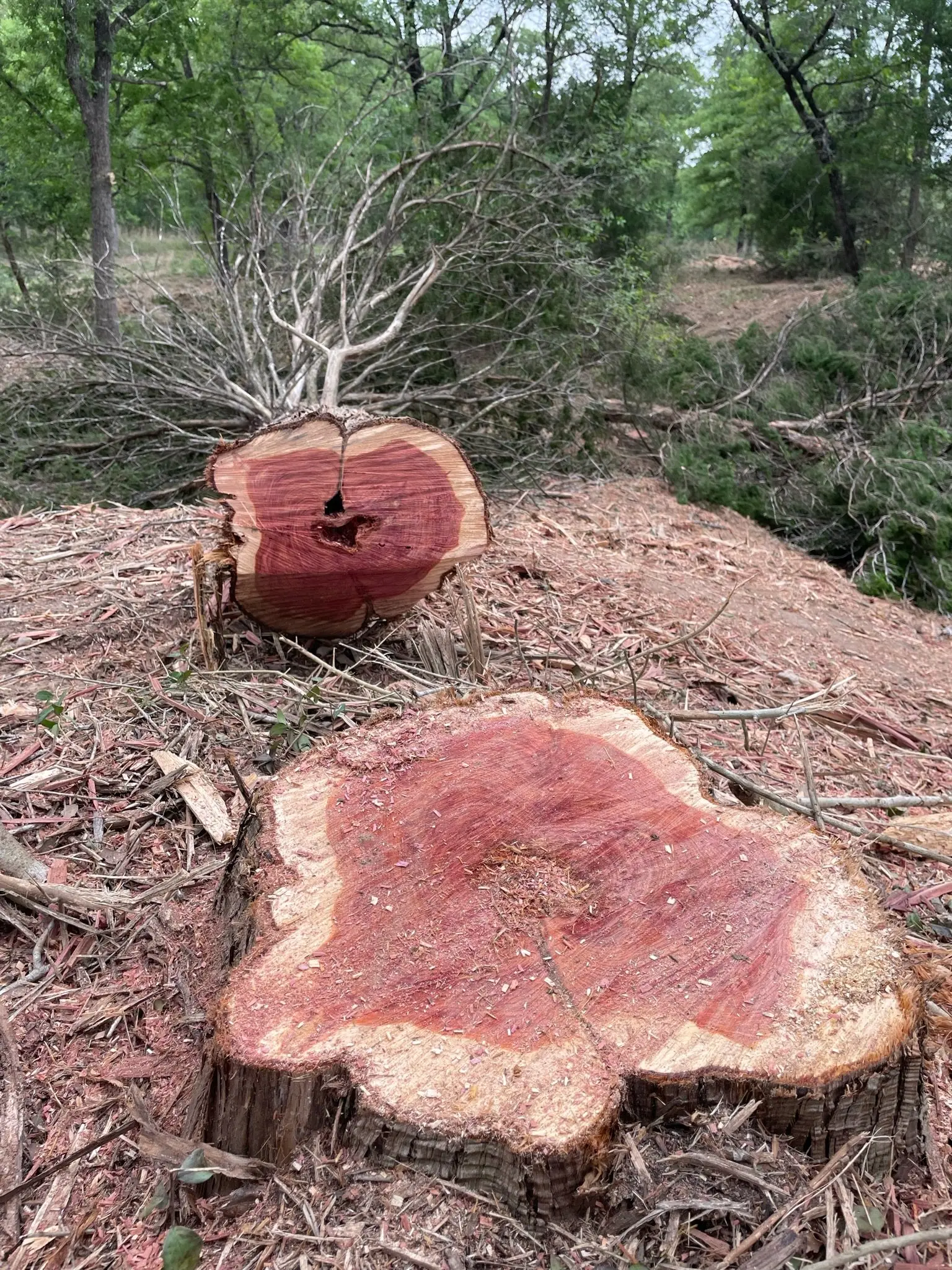
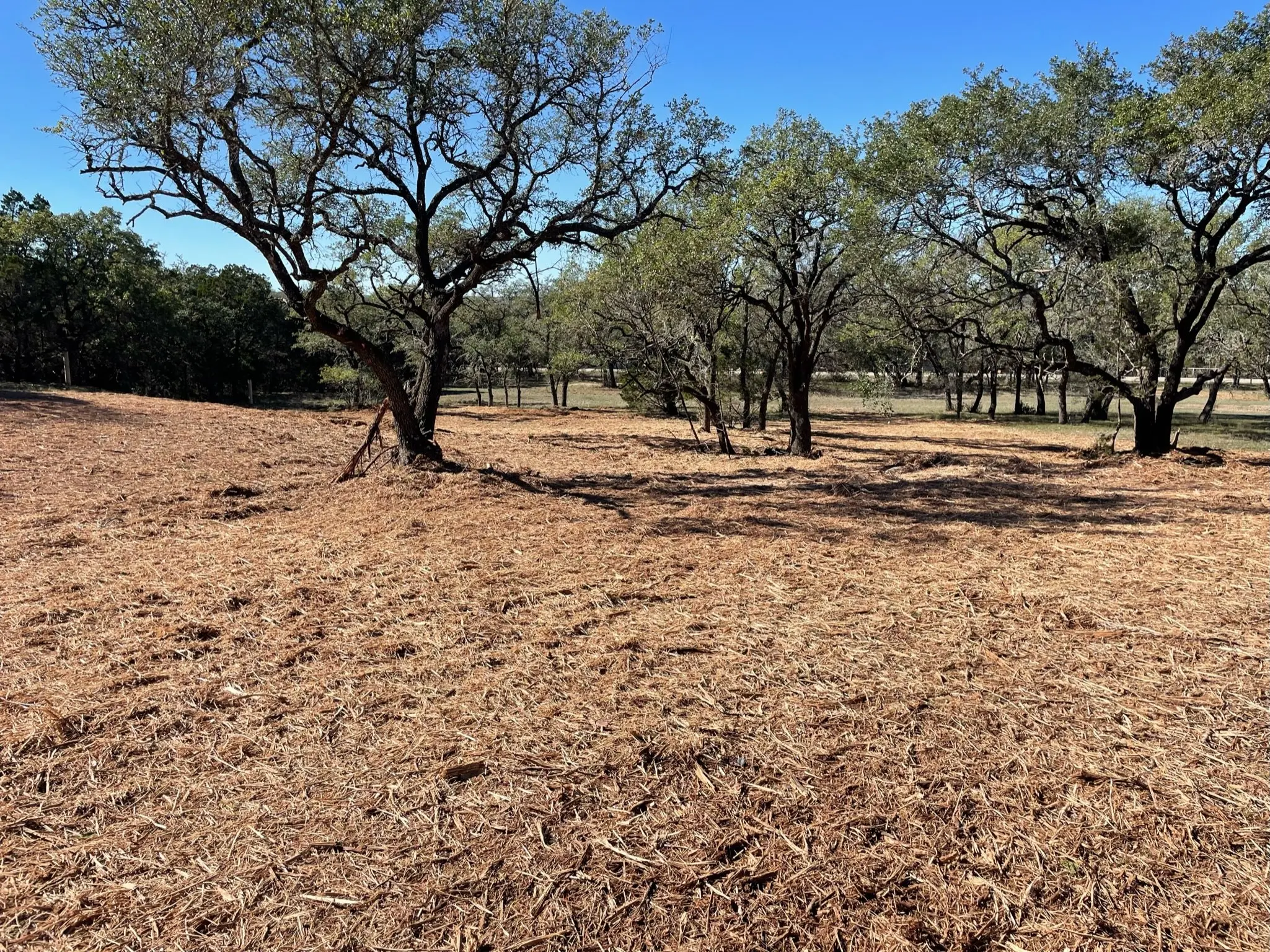
Some of our favorite jobs are oak groves buried in cedar. We mulch the cedar out from between the trunks and leave the live oaks standing over open, covered ground, with room to spread and water that used to go to the cedar.
Freed oaks often fill out over the next few seasons once the competition is gone. It’s one of the most visible changes a cedar job makes, and one of the reasons owners call us back for the next stand.
Oak wilt is active in the Hill Country, so we follow Texas A&M Forest Service guidance: no wounding oaks from February through June, and any wound gets painted. A hand crew handles the cedar tight against the oaks with chainsaws.
The right machine for the cedar you have
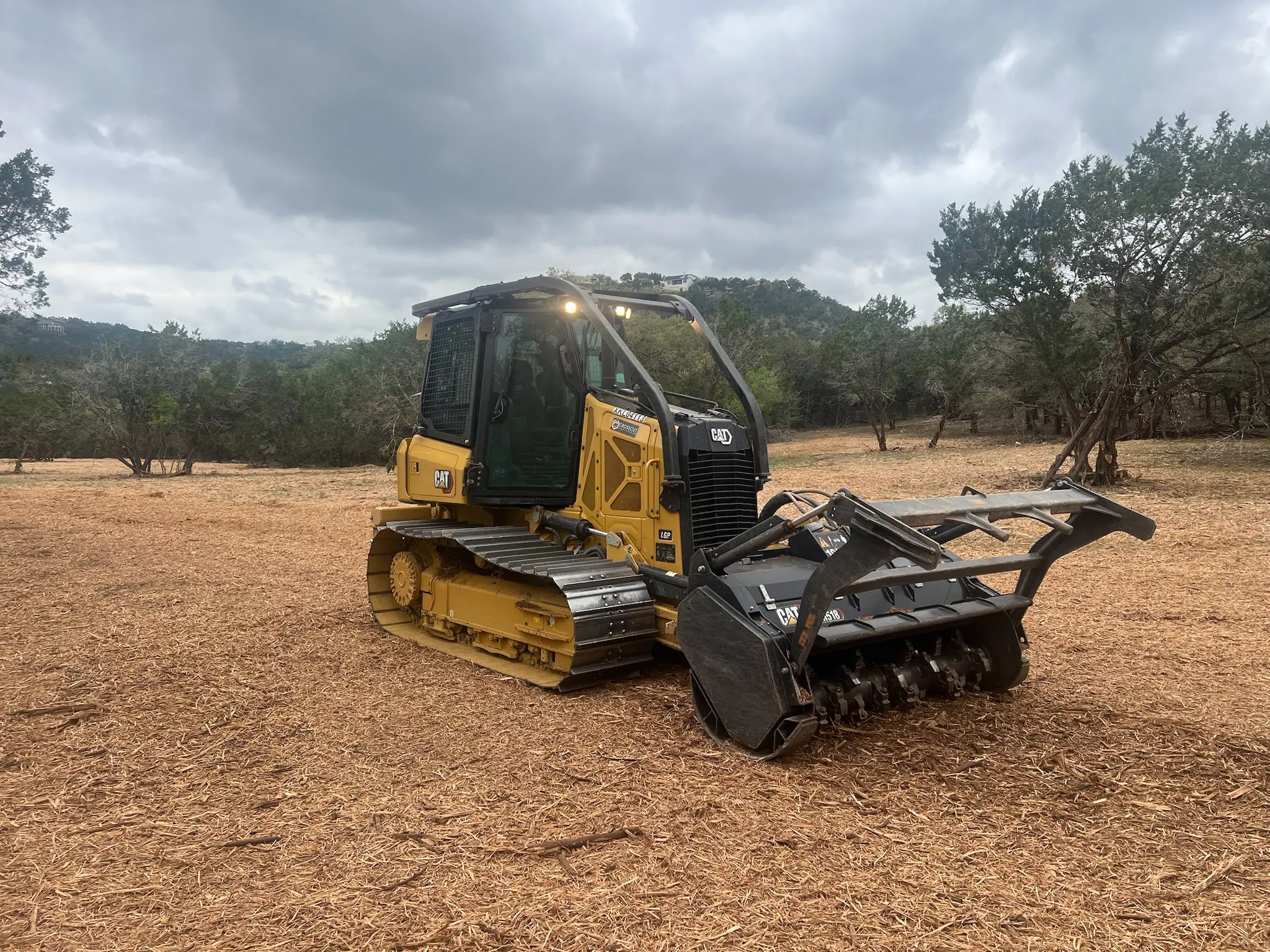
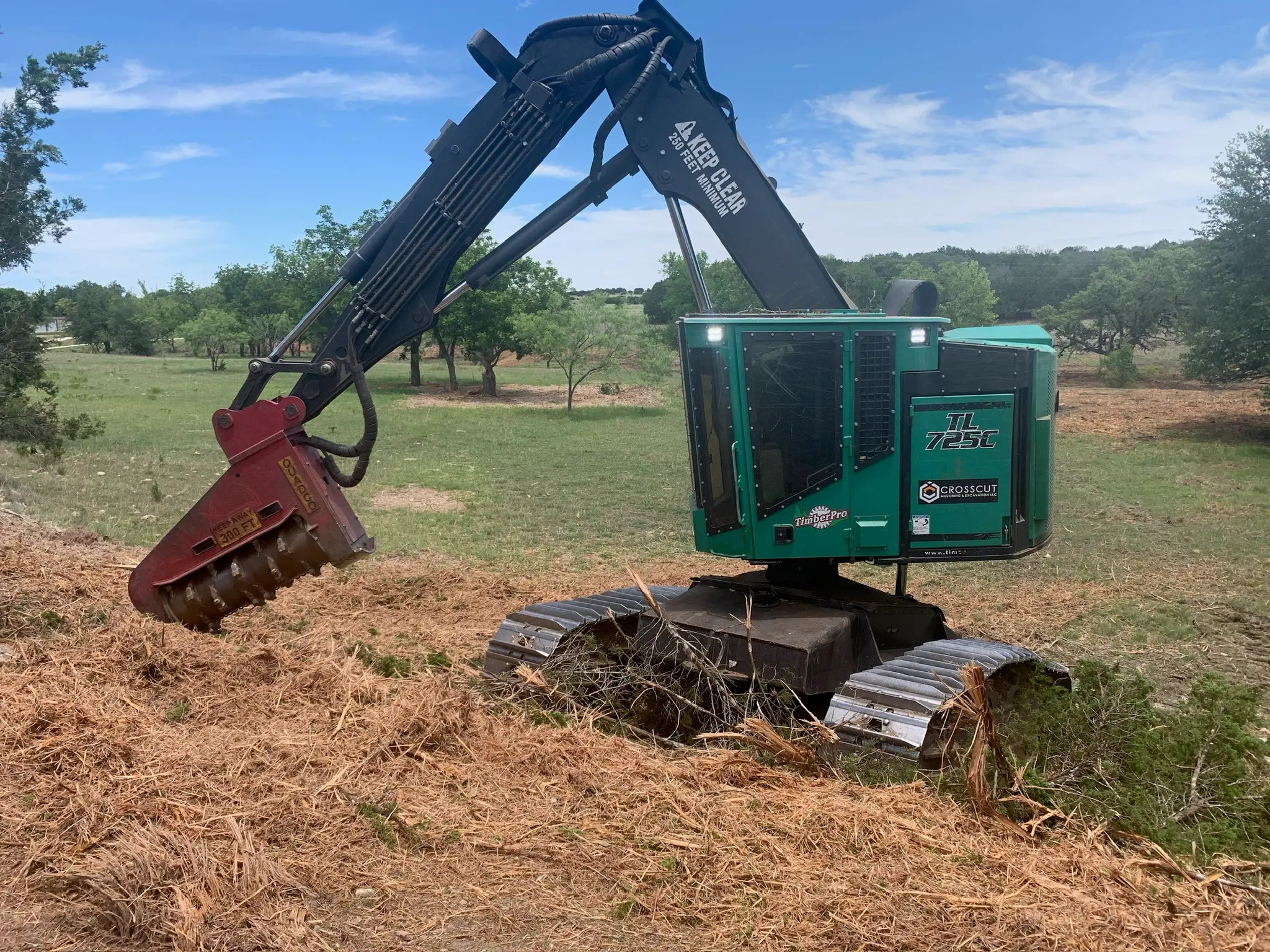
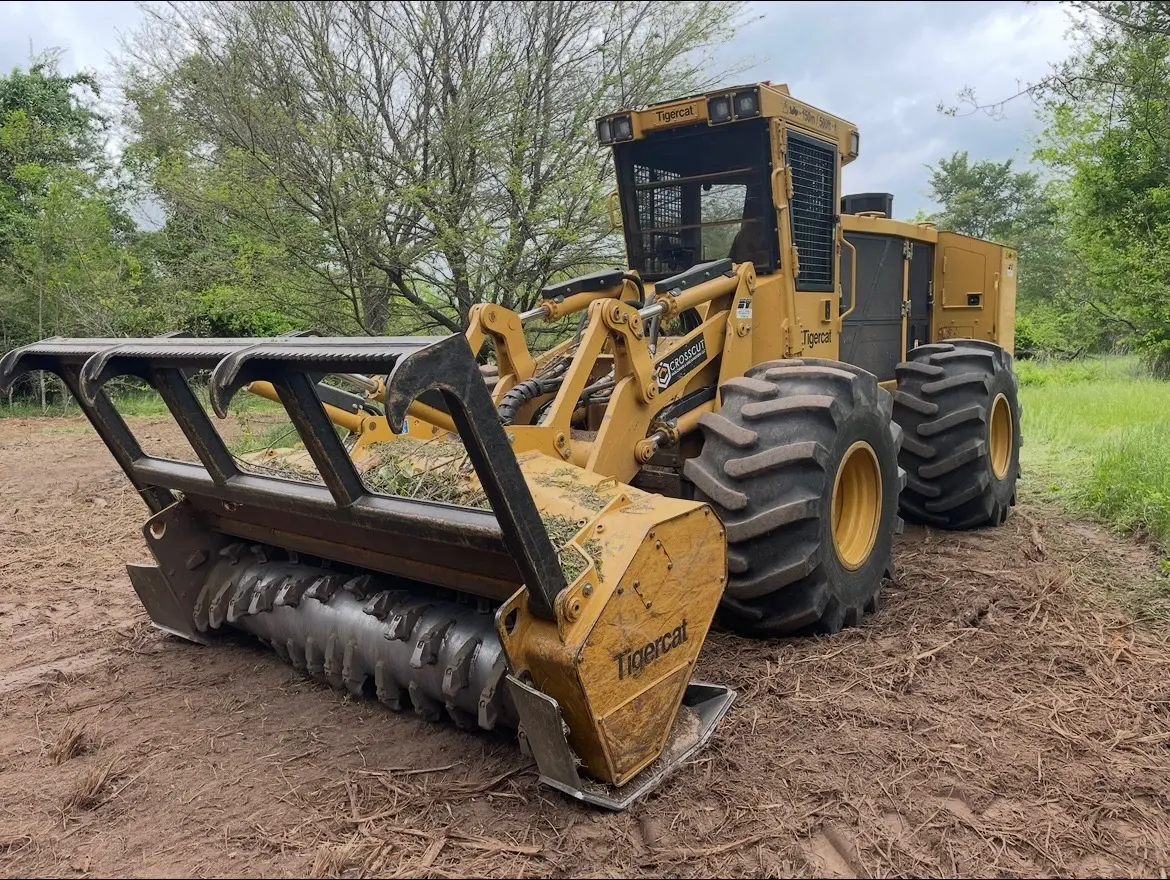
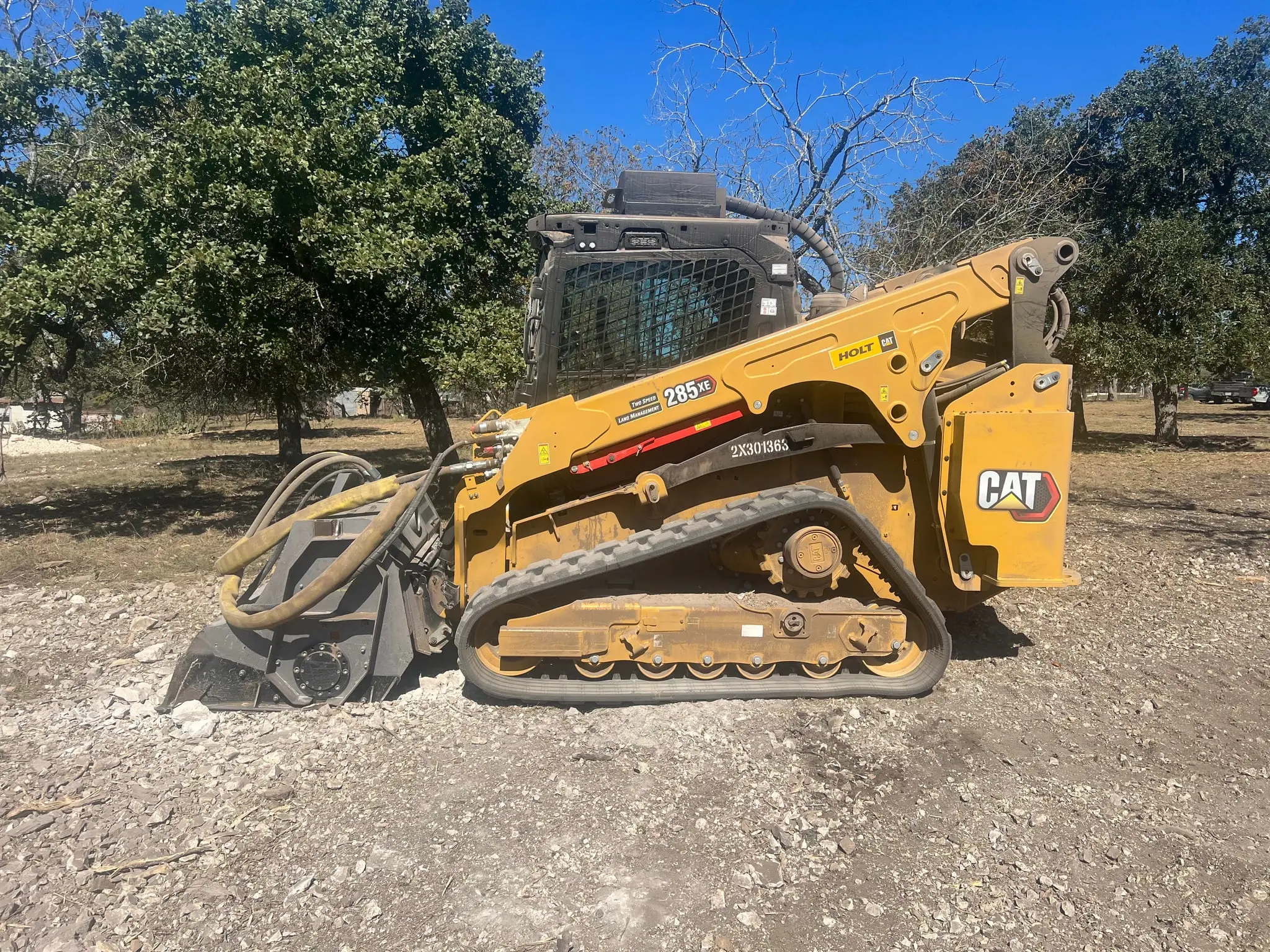
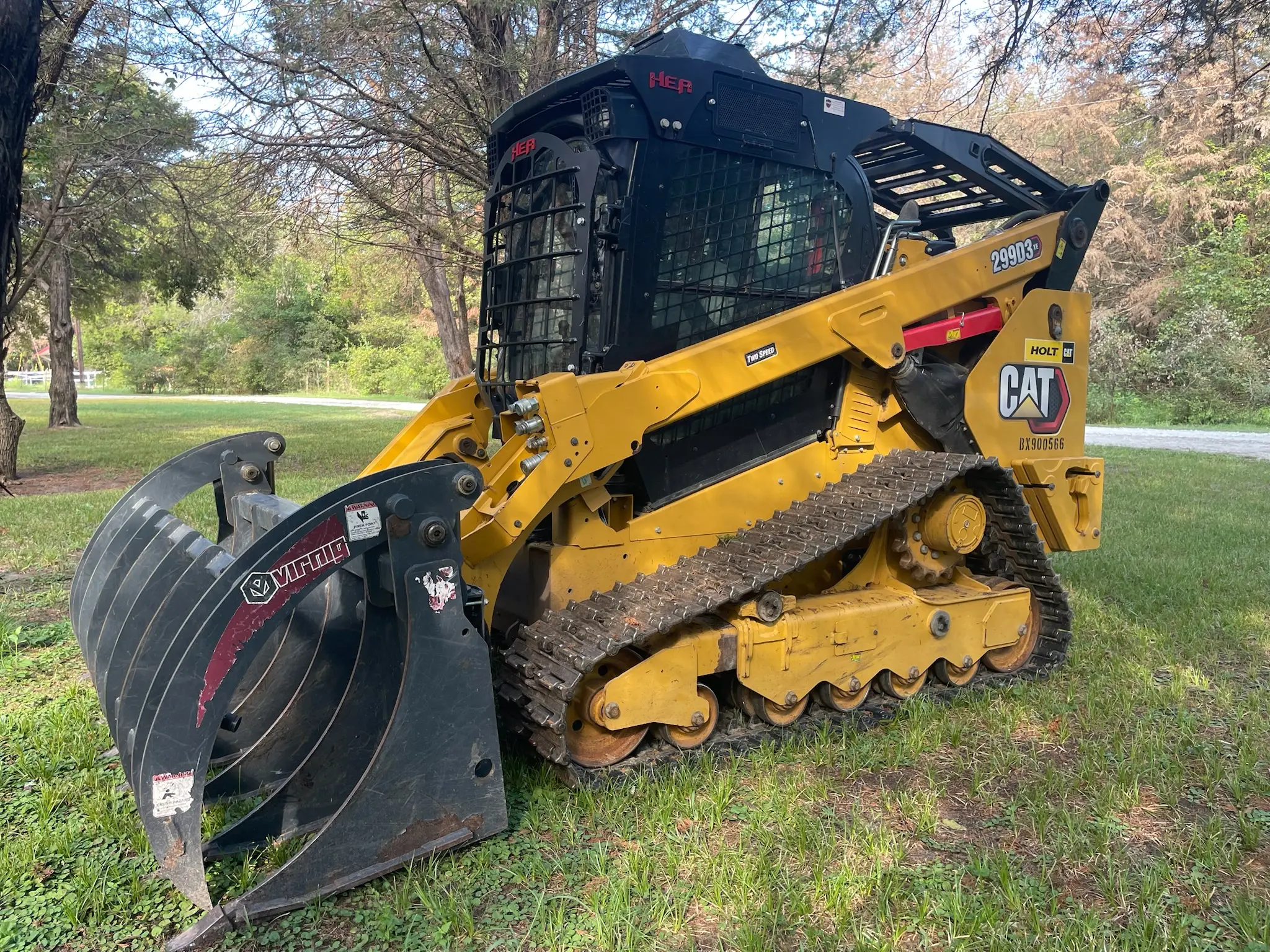
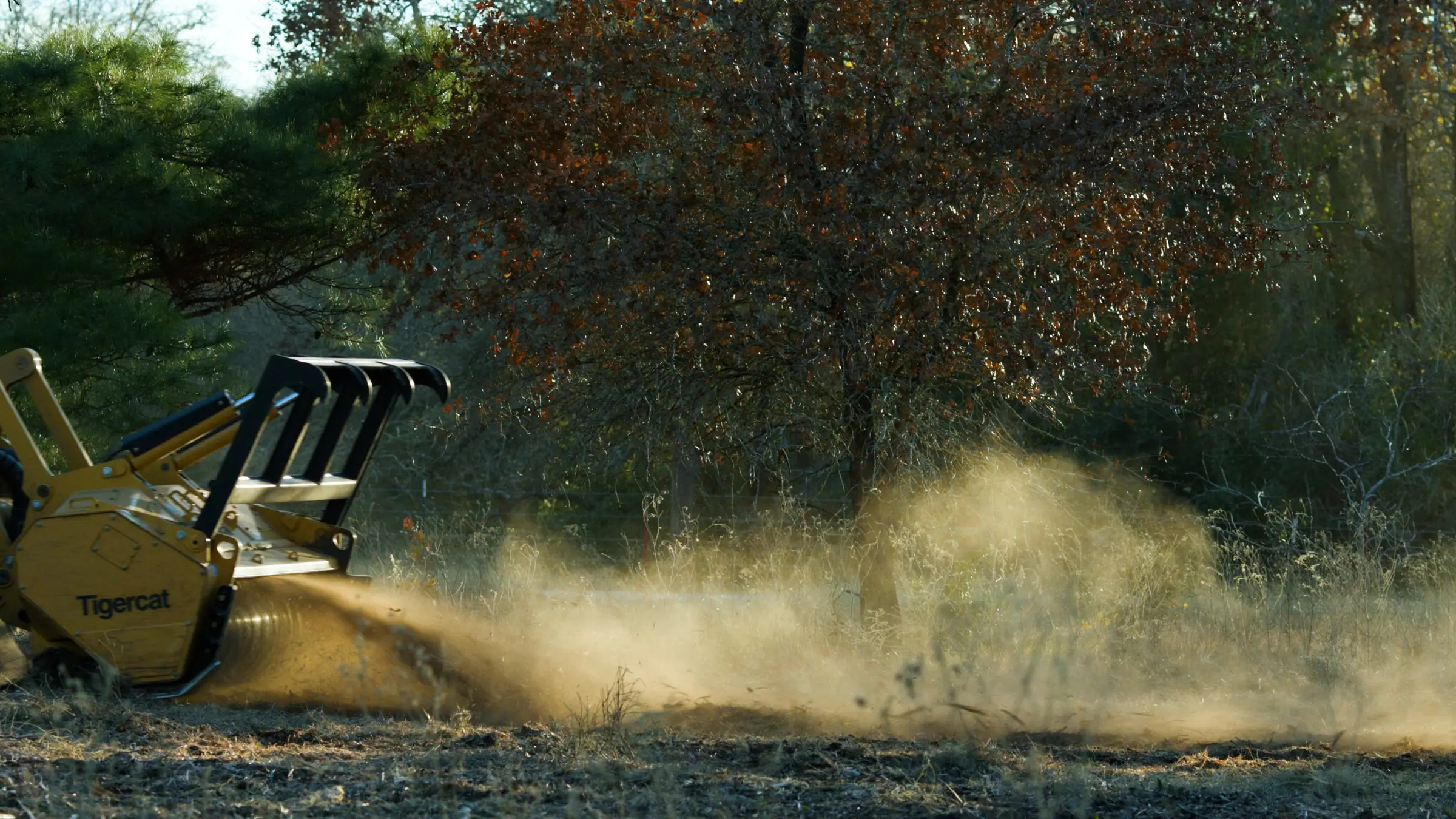
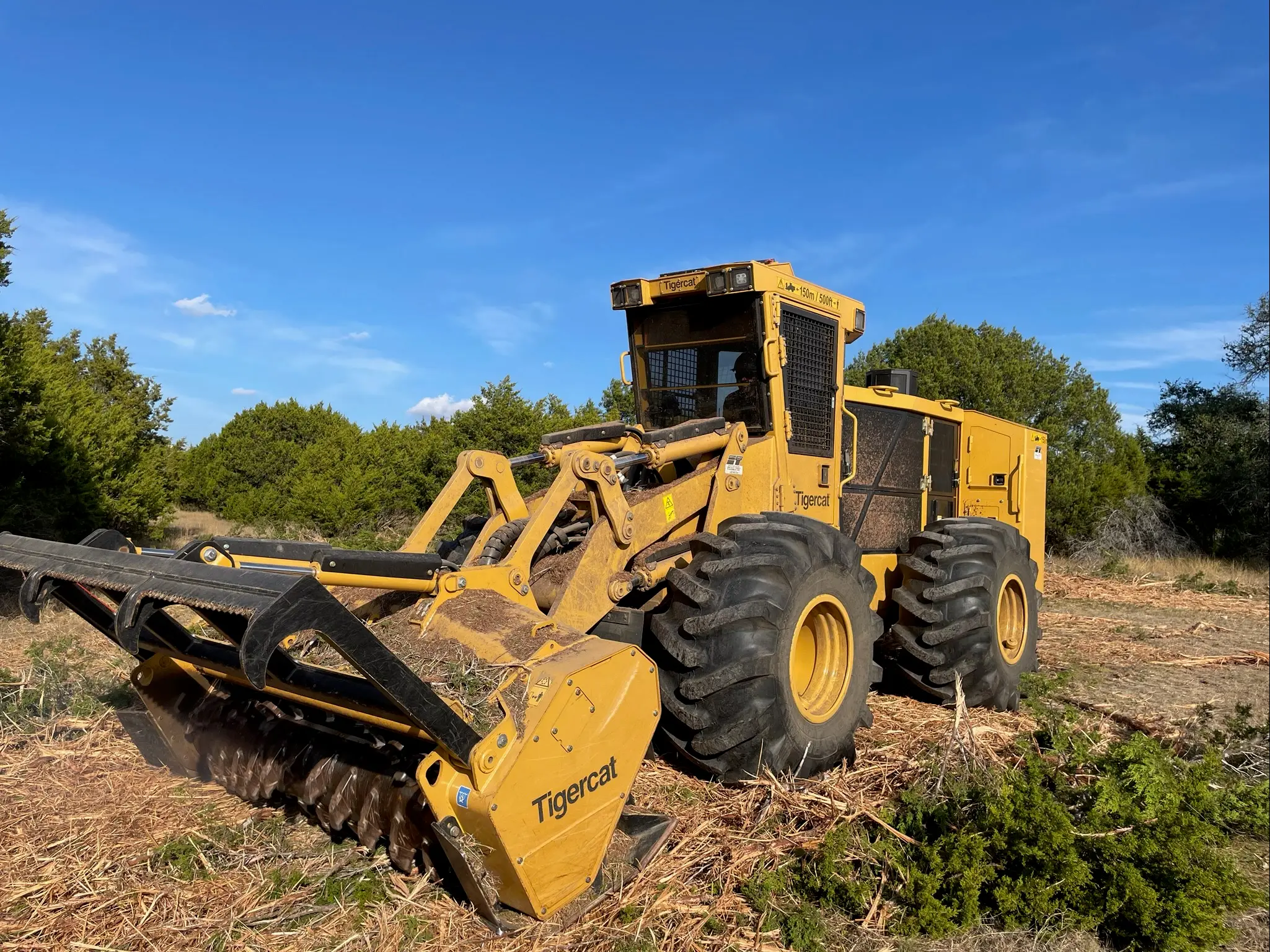
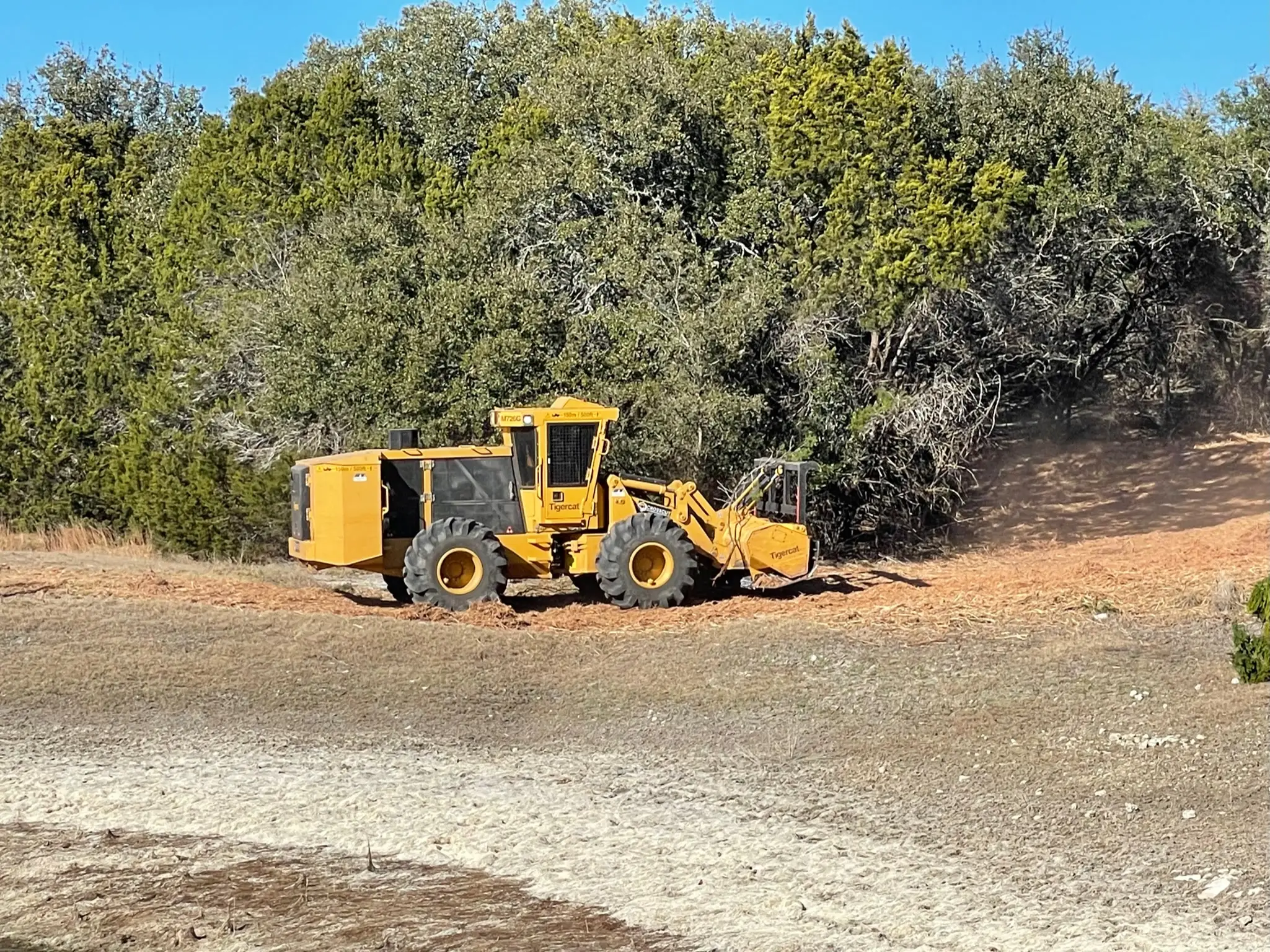
On dense cedar across open ground, the Tigercat M726G grinds trees of any size down to mulch. On steep or rocky slopes, the Timberpro TL725C reaches out with its boom-mounted head. Fence rows and tight spots go to the Cat D1 dozer mulcher, and the skid steer mulching heads clean up scattered cedar and regrowth.
How long it takes depends on how thick the cedar is, the size of the trees, the terrain and how clean you want the finish. The owner who walks your property gives you a schedule after seeing it.
Mulched in place, even in a burn ban
Because nothing is piled or burned, the work keeps going through county burn bans. There are no burn piles to manage and no trucks hauling brush down your road.
Where mature oak-juniper woodland could be golden-cheeked warbler habitat, we check before cutting. That’s part of the walk-through, not something we find out halfway through the job.
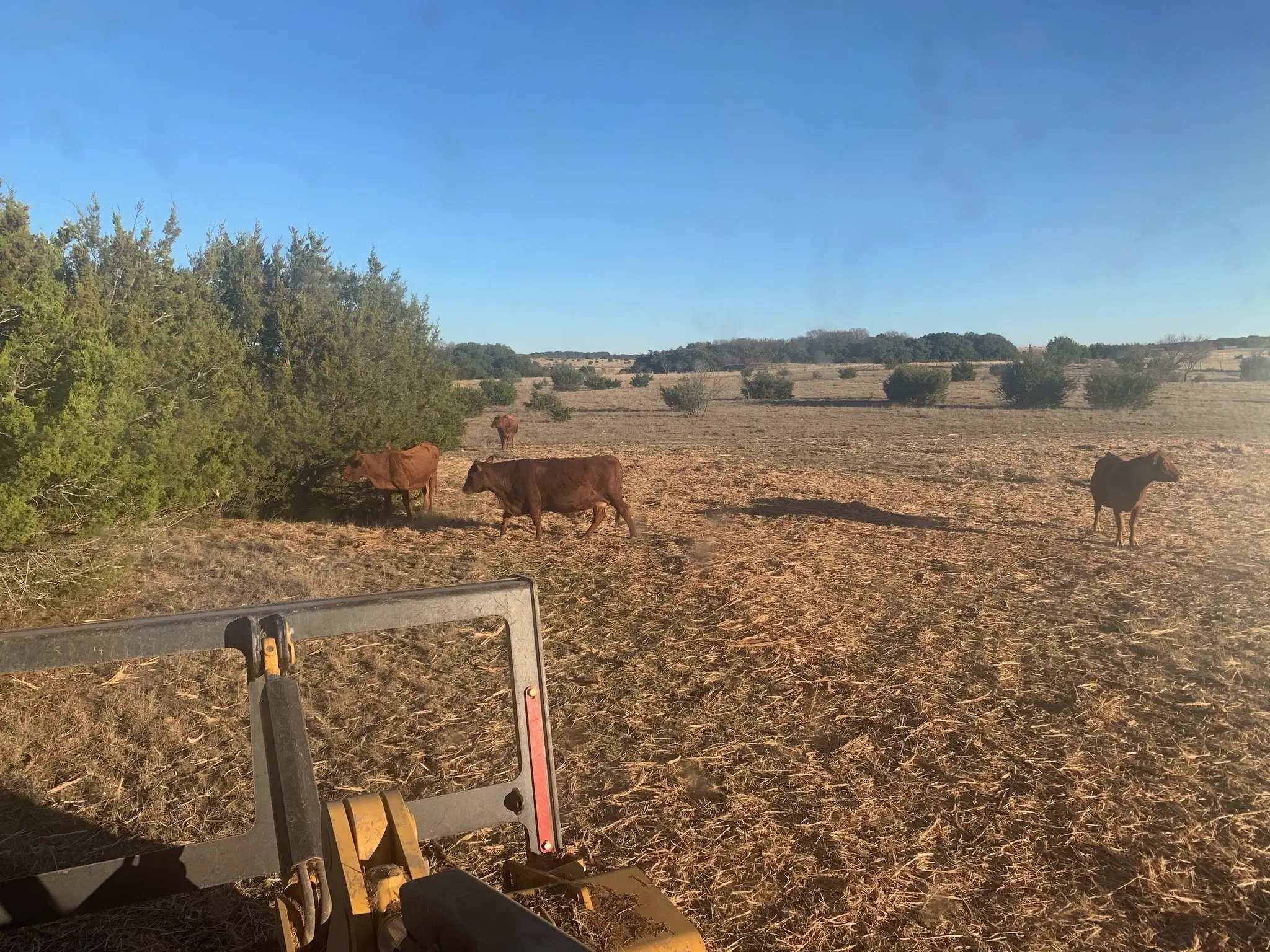
Cedar mulching is also a common first step in pasture restoration. Once the cedar is down, grass has the light and water it needs, and any mesquite in the same field can be grubbed out so the pasture stays open.
What the job can include
- Cedar mulching
- Cedar removal and thinning
- Freeing oaks from cedar competition
- Fence row cedar clearing
- Clearing old cedar piles
- Regrowth management