
Lampasas County sits on the Lampasas Cut Plain, where flat-topped limestone hills break into long valleys carved by the Lampasas River and Sulphur Creek. The town of Lampasas grew up around its springs (Hancock Park still has a spring-fed pool), and three US highways meet there. To the east, Kempner sits near the western edge of Fort Cavazos; to the west, the land drops toward the Colorado River and Colorado Bend State Park just across the San Saba County line.
Cedar is the defining problem on the mesa tops and slopes, and mesquite takes over valley pasture once grazing slows. Ranchers along US-183 toward Lometa are reclaiming grass, buyers near Kempner and US-190 are building homesites for the growing Killeen area, and hunting land west of FM 580 needs lanes and openings.
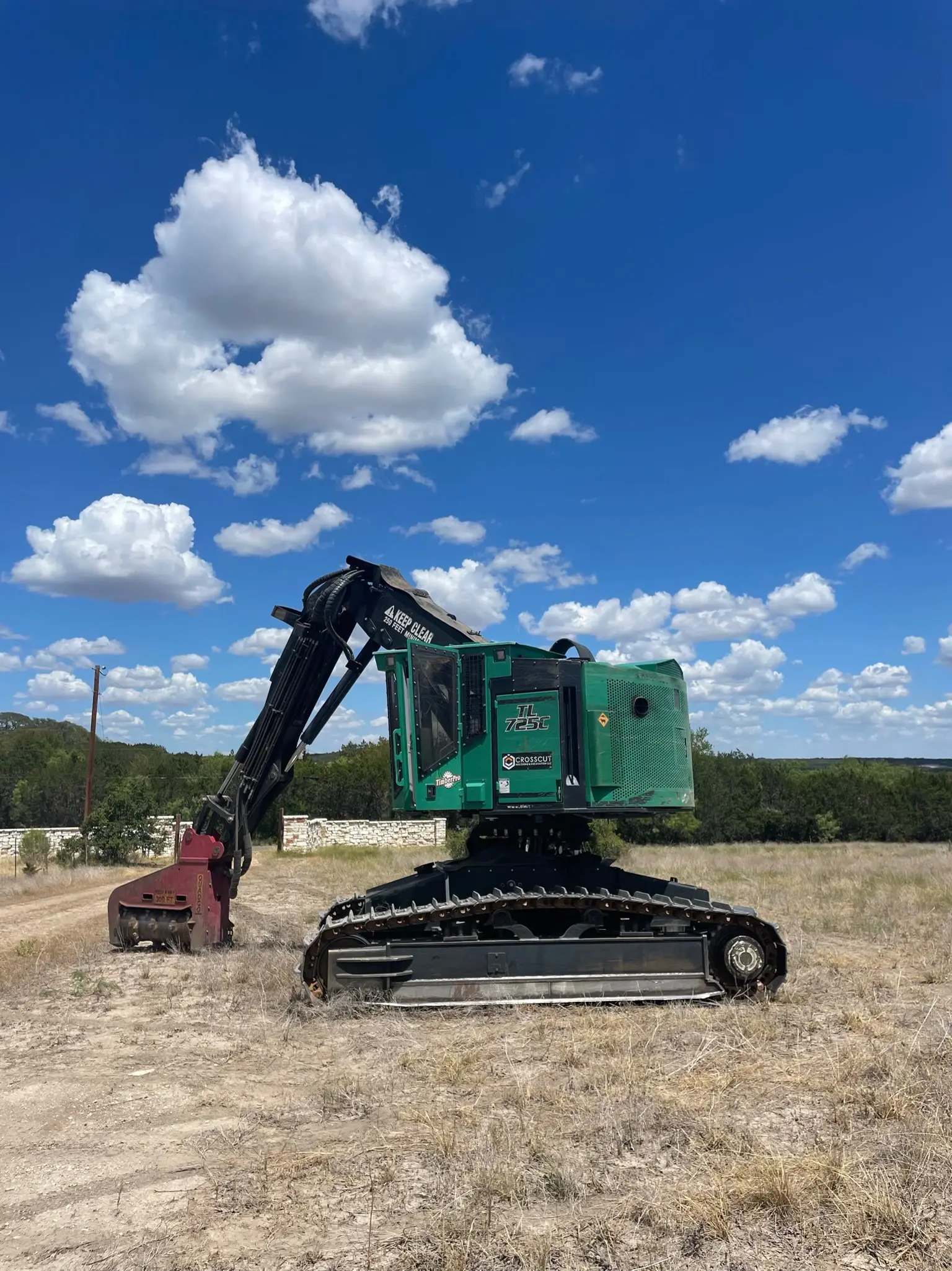
Rocky slopes and shallow soil make mulching the practical choice for most land clearing in Lampasas County. It’s a direct run up US-281 from Bertram, and Jordan LaVine walks every property before we quote.
Communities we work in Lampasas County
- Lampasas
- Kempner
- Lometa
- Adamsville
- Bend
Mesa slopes and valley pasture
The Cut Plain gives the county two landscapes: steep, rocky cedar slopes below the mesa rims, and deeper valley soils along the Lampasas River and Sulphur Creek. Mesa tops often have only inches of soil over limestone, which limits what a dozer can do and favors mulching. Both creeks run fast after heavy rain, and low water crossings on ranch roads take a beating.
Most of the work is ranch and hunting land: cedar mulching on slopes, mesquite grubbing in the valleys, fence line clearing and wildlife openings. Around Kempner and along US-190 we see more homesite and driveway clearing as buyers look for acreage near Killeen and Fort Cavazos.
Few county rules, a few federal ones
Outside Lampasas and Kempner city limits there usually aren’t county tree permits. Mature oak-juniper woodland in this part of the state can be golden-cheeked warbler habitat protected under federal law, so we check before clearing it.
Oak wilt is active in Central Texas, and we follow Texas A&M Forest Service guidance on every property with oaks. Mulching keeps projects moving during county burn bans, when piling and burning isn’t allowed.